A garage cleanout can contain several waste streams even when everything fits in the same corner. Old electronics, batteries and partly used household products should not be treated as one undefined junk load. Start with an inventory and confirm receiving options before a hauling crew arrives. That reduces the chance of a refused load or material being handled through an unsuitable route.
Indianapolis publishes service information for recycling and household hazardous-waste programs, but schedules and acceptance need current confirmation. This guide explains the decisions to organize rather than inventing open hours, eligibility or a complete local accepted-item list. Use the official program and provider for the final instructions.
Create separate inventory categories
List ordinary bulky items, electronics, batteries, liquids and unknown products separately. Keep labels and existing containers intact where safe. Do not open or combine unknown contents to simplify the list. A provider can give more useful guidance when it knows the material categories rather than hearing only that you want the garage cleared.
Identify electronics before booking hauling
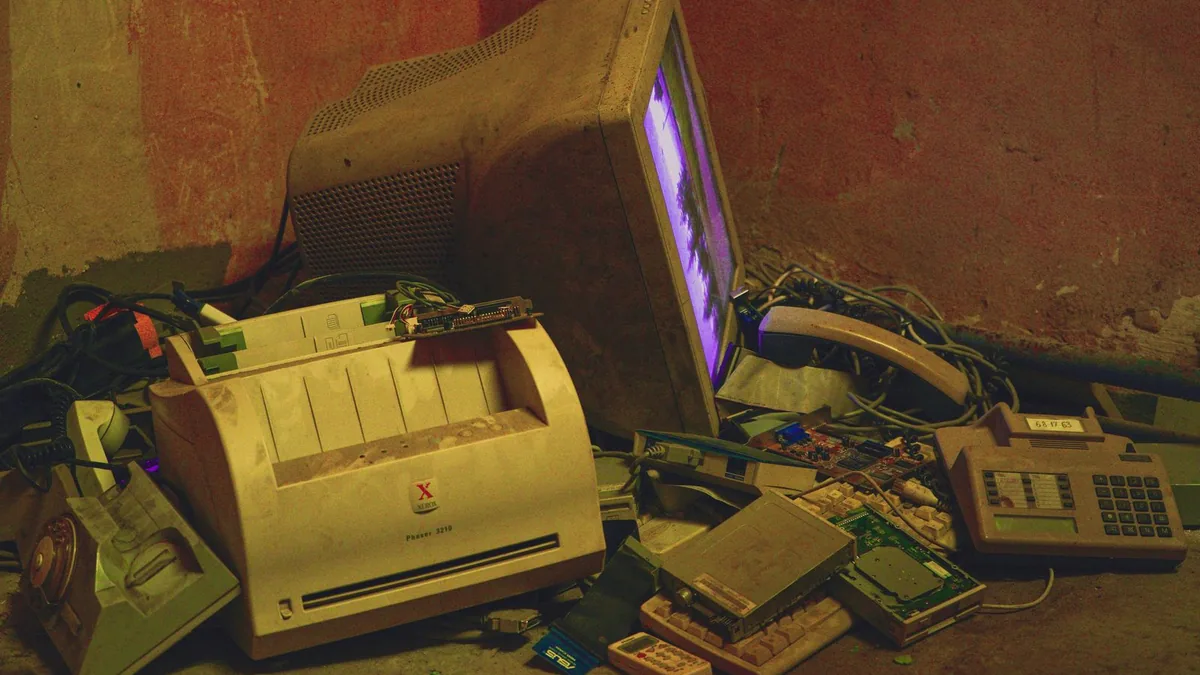
Describe televisions, computers, peripherals and other devices by type and condition. Ask the receiving program what it accepts and whether fees or quantity limits apply. Do not assume a general household-junk service accepts every device. A complete cleanout can require more than one destination even when a single truck could physically carry the material.
Keep battery questions explicit
EPA advises that lithium-ion batteries and devices containing them should not go into ordinary household garbage or municipal recycling bins. Ask the appropriate collection program for the current handling route for your items. Do not improvise disassembly or handling of a damaged battery. Describe its condition accurately and obtain qualified guidance where needed.
Protect personal information before transfer
For devices that may hold personal data, decide how you will manage that information before donation or recycling. Ask the receiving service what data-related process it offers and what documentation is available. Do not assume recycling automatically includes the level of data handling you need. Keep that service decision separate from simple physical collection.
Distinguish reuse from recycling
If equipment still works, ask a potential recipient about its needs and acceptance requirements. Do not promise functionality you have Confirm directly. If reuse is not suitable, confirm an appropriate recycling route. Neither choice should be based solely on a desire for the item to disappear; the recipient or program must agree to accept the actual device.
Identify household products needing special advice
EPA describes household hazardous waste as certain leftover products with hazardous properties. Ask the local program about identified paints, chemicals or other items rather than applying a casual household-versus-commercial rule yourself. Do not pour products together or down drains to reduce the number of containers. Follow current label and program guidance for the actual material.
Use official local information carefully
Indianapolis's official service pages are the starting point for current local collection information. Confirm the program, location, timing, eligibility and material acceptance directly before travel. A search result or old discussion is not a reliable substitute for a current program notice. This article deliberately does not publish an invented calendar or universal drop-off entitlement.
Ask about transport and pickup options
Some receiving arrangements may be drop-off rather than collection. Ask what preparation and transport requirements apply and whether a qualified pickup service is available. Do not assume a junk hauler can deliver material under a household program's terms. Confirm the relationship between the collector and destination before authorizing a mixed load.
Verify environmental and certification claims
If a recycler claims a certification relevant to your decision, verify its current status through the appropriate organization. EPA provides information about electronics recycling certifications. A logo on an advertisement or a general environmental statement is not independent proof of current status or a guarantee about every downstream outcome. Ask for an understandable process, not just a slogan.
Clarify rejected-item handling
Ask what happens if the destination will not accept a disclosed item. Identify whether the collector returns it, leaves it pending instructions or proposes another approved route. Do not authorize an undefined disposal-anywhere instruction. A clear exception process matters particularly when unknown or damaged products are discovered during an otherwise ordinary cleanout.
Compare full service and material charges
Ask about collection labor, special-item charges, receiving fees and documentation. Obtain current terms for the actual inventory. Do not compare an ordinary junk price with a specialist route without identifying the difference in work. A complete estimate explains which categories are included and which remain for you to arrange separately.
Retain the inventory and transfer record
Keep a record of what left, where it was accepted and any documentation promised by the service. Remove retained personal documents or devices from the discard area. If materials remain, label the next decision clearly rather than merging them back into ordinary junk. A clean floor is useful only when the unresolved items have not simply been hidden elsewhere.
Frequently asked questions
1. Can electronics go with ordinary household junk?
Confirm the actual provider and local program requirements for each type of device. Do not assume a truck's available space establishes acceptance. Electronics may need a separate receiving route, and the hauling service should explain exactly which devices it will handle and where they are intended to go.
2. Can lithium-ion batteries go in the recycling cart?
EPA says they should not be placed in ordinary household garbage or municipal recycling bins. Use an appropriate battery, electronics or household hazardous-waste collection route and confirm current instructions. Do not improvise handling of a damaged device or assume removing it yourself is always appropriate.
3. Does recycling include deleting my data?
Ask explicitly. Physical collection and data handling are different services. Decide what process you need before transferring devices that hold personal information and request any promised documentation. A general recycling label should not be treated as a guarantee that every data-security requirement you have is automatically met.
4. Can I mix leftover chemicals into one container?
Do not combine unknown or different products to simplify a cleanout. Preserve identifying information where safe and seek current label and collection-program guidance. This article does not provide chemical disposal recipes. Describe the materials accurately so the appropriate program can explain its acceptance and handling requirements.
5. Where and when is Indianapolis drop-off available?
Check the current official program notice and confirm the location, schedule, eligibility and accepted materials before travel. This article does not invent a calendar or guarantee availability. Programs can have specific requirements, so an old thread or search snippet should not be your final instruction.
6. Can a private hauler use the household program for me?
Ask both the collector and receiving program before assuming that arrangement is allowed. Household eligibility and commercial collection terms may differ. The provider should confirm an appropriate destination for the actual service rather than relying on a vague promise to take everything to the local drop-off.
7. Are all recycling certifications interchangeable?
Verify the specific current claim and what it covers through the relevant organization. EPA provides background on electronics recycling standards. Do not infer that a logo guarantees every service or downstream outcome you care about. Ask how the actual process relates to your devices and documentation needs.
8. Can working equipment be donated instead?
Ask the receiving organization about its current needs, condition requirements and data considerations. Do not guarantee functionality you have not checked. Reuse can be an option, but acceptance belongs to the recipient. A donation preference does not authorize leaving equipment at an organization that has not agreed to receive it.
9. What if the service refuses an item on arrival?
Refer to the disclosed inventory and ask for an appropriate next route. Do not pressure a worker to take unidentified or unsupported material under an ordinary junk booking. A clear exception process should leave the item safely awaiting guidance rather than disappearing through an undefined disposal arrangement.
10. What records should I request?
Keep the inventory, accepted scope, invoice and any promised receiving or data-handling documentation. Record items left for another route. The level of evidence should match your needs, but the service should not promise a document it cannot supply or treat an environmental slogan as a substitute for a clear process.
Sources and related reading
- Indianapolis official recycling information.
- Indianapolis official service directory including ToxDrop.
- EPA: household hazardous waste.
- EPA: used lithium-ion batteries.
- EPA: certified electronics recyclers.
- Find relevant directory contacts. Confirm the exact service with the business.
Prepared as consumer decision guidance, not a diagnosis, engineering plan, legal opinion or guarantee of project results. Public discussion supplies question context, not independent proof about vendors or every Indianapolis property.