Cleaning behind a refrigerator or range sounds like one task, but it can involve several different responsibilities. An Indianapolis resident asked for a service that would move kitchen appliances before pest treatment. The key planning issue is access: who can safely move the equipment, who cleans the exposed area and who confirms that connections remain appropriate afterward? Establish those roles before the appointment instead of asking a house-cleaning crew to make mechanical decisions on arrival.
Name each appliance that needs access
List the refrigerator, range, dishwasher and laundry equipment separately. Include photographs of the surrounding space if safe to take. Freestanding equipment, built-in units and stacked machines have different access constraints. Avoid requesting an unspecified kitchen deep clean when the real job depends on moving several connected appliances that may be outside the cleaner’s normal service.
Ask the cleaner what it will move
A company may move light items while excluding heavy equipment and connected appliances. Obtain its actual policy and any limits in writing. Do not interpret a willingness to clean an exposed floor as agreement to create that access. If the unit must remain in place, ask what reachable areas can be addressed and what will remain excluded.
Keep disconnection work with the right provider
Gas, water and electrical connections require appropriate handling. This guide does not provide instructions for disconnecting them. Ask a suitably qualified service professional whether movement is safe and what preparation is necessary. A cleaning appointment should not become an improvised repair visit, particularly when an old or damaged connection is discovered behind the equipment.
Explain floor and finish concerns
Tell the provider about delicate flooring, uneven transitions and any existing damage. Ask how movement and protection will be handled by whoever is responsible. Photographs of pre-existing marks can reduce confusion later. A low cleaning price is not useful if nobody has considered whether the appliance can be moved without damaging the floor or surrounding cabinetry.
Coordinate with pest-treatment instructions
If access is needed for pest work, ask the pest professional for written preparation and post-treatment instructions. Cleaning at the wrong time can conflict with the intended treatment. Do not substitute general advice from another household for the instructions relevant to the product and method being used. Share the plan with both businesses before confirming their appointments.
Define the exposed-area cleaning task
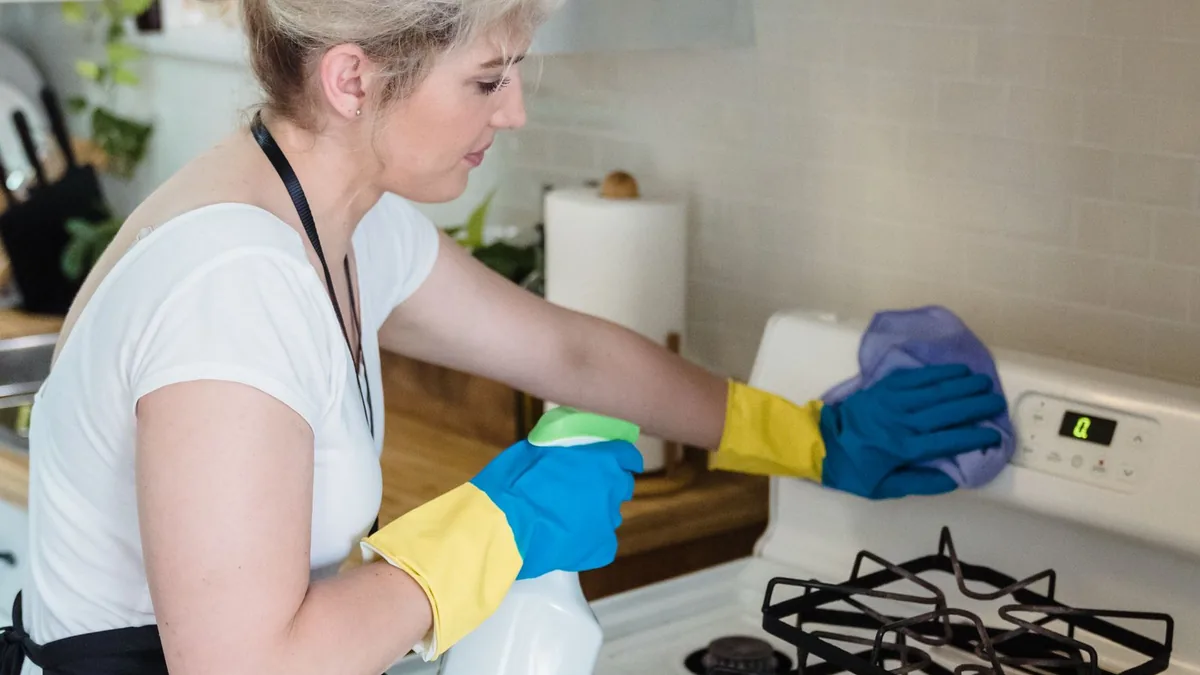
Specify whether the cleaner will address the floor, wall surface, reachable cabinet sides and appliance exterior. Grease, dust and spilled food can need different surface-compatible methods. Ask about exclusions for damaged materials, suspected mold or contamination. Cleaning an exposed area does not automatically include opening the appliance housing or cleaning internal mechanical components.
Avoid adding chemicals without a plan
Tell the cleaner about products already applied and any manufacturer restrictions. Do not layer household mixtures over an unknown pest treatment or residue. Ask which products will be used and where. A product’s fragrance or advertising does not tell you whether it is appropriate for the material, the task or the conditions behind a particular appliance.
Arrange food and laundry around the visit
Ask the appliance professional what preparation is needed and whether equipment will be unavailable. Plan food storage, meals and laundry accordingly. Do not guess how long an appliance can remain disconnected or when it can restart; follow its instructions and professional guidance. The cleaner needs a realistic access window rather than an open-ended wait between other appointments.
Handle unexpected leaks as a separate issue
If movement reveals moisture, damaged wiring, a leaking connection or another concerning condition, stop treating the job as ordinary cleaning. Notify the responsible professional and ask what assessment is needed. Photograph from a safe position when appropriate. Removing visible dirt is not a remedy for an active leak or a connection that needs repair.
Confirm who returns and checks equipment
The agreement should identify who moves equipment back and who handles any required reconnection or operational checks. Do not leave that responsibility implied between two providers. Ask what completion record each business supplies. A clean floor alone does not mean the equipment is ready to use, and a cleaner should not be required to certify mechanical safety.
Compare the combined project cost
Obtain separate scopes for access, cleaning and any appliance service. Ask about minimum visits, waiting time and return attendance. Scheduling those components efficiently may matter more than selecting the lowest cleaning-only quote. Current written estimates for the actual equipment are more meaningful than a neighbor’s price for a simpler appliance that was easy to reach.
Create an easier future maintenance arrangement
Once the work is complete, ask which areas can be maintained without moving equipment and which need occasional professional access. Keep model information and the completed work record. Do not schedule repeated heavy movement solely because a generic checklist recommends it. Maintenance should reflect the appliance instructions, actual condition and what can be accessed safely in the home.
Frequently asked questions
1. Will any deep cleaner move a stove?
No universal policy applies. Ask the business directly and explain the connection type. A cleaner may exclude the move while agreeing to clean afterward, so assign appliance access to an appropriate professional when needed.
2. Can I disconnect appliances myself to save money?
This guide does not provide disconnection instructions. Ask a qualified professional about the actual equipment and connections. Incorrect handling can create risks that outweigh a cleaning saving, especially when the appliance condition is uncertain.
3. Does this include refrigerator coils?
Not unless specifically agreed and appropriate to the model. Cleaning the floor behind a refrigerator and servicing its components are different tasks. Ask who provides the work and which manufacturer instructions will be followed.
4. Should cleaning happen before pest treatment?
Ask the pest professional for the sequence relevant to its method and products. Requirements can differ. Give those written instructions to the cleaner so preparation does not accidentally conflict with treatment or later maintenance.
5. What if there is mold behind the appliance?
Tell the providers and request an appropriate assessment of the affected area and moisture source. Do not silently add suspected mold remediation to a standard cleaning visit or assume wiping the visible surface resolves the problem.
6. Who pays if flooring is scratched?
Discuss the business’s damage-reporting process and agreement before movement. Document existing condition. Responsibility depends on the facts and terms; the directory cannot determine it or promise that a particular policy will cover a claim.
7. Can a dishwasher simply be pulled out?
Built-in appliances can have secured components and connections that need professional assessment. Do not assume the cleaner can move one. Explain the exact model and installation to the provider responsible for creating access.
8. Should I empty the refrigerator first?
Ask the appliance professional what preparation is required for the planned movement. Confirm food-storage needs and timing. Avoid guessing the preparation from a generic cleaning checklist when the actual access plan has not been agreed.
9. Can both services happen on the same day?
Possibly, if their timing and responsibilities are coordinated. Confirm access, waiting charges and what happens if the first appointment runs late. A same-day plan should include a fallback rather than leaving equipment displaced without support.
10. What should the final invoice describe?
It should distinguish appliance movement or service from cleaning tasks and any approved extras. Keep notes about unresolved conditions. Clear records help arrange future access and avoid assuming a mechanical concern was fixed during a cleaning visit.
Sources and related reading
- Local appliance-access cleaning question.
- Competitor: coordinating cleaning after pest work.
- EPA Safer Choice.
- Find category contacts and confirm the exact service directly.