A dress that needs a hem adjustment presents a different project from one needing changes to its neckline, lining and overall fit. Indianapolis alteration discussions include both straightforward recommendations and requests for several changes to a wedding gown. Before choosing a tailor, turn your ideas into a fitting plan. The goal is to understand which changes are feasible, what they affect and how many decisions remain open before the garment is ready.
Describe the garment and the intended changes
Tell the shop whether the dress is new, previously worn or secondhand, and describe the material and visible details. List changes separately rather than requesting that the gown simply be made smaller. A photograph can help arrange a consultation, but it cannot establish every construction issue or replace an in-person garment assessment.
Arrange an assessment before assuming feasibility
Ask the alteration specialist to explain which changes are practical with the dress as constructed. Some ideas affect structure, seams, embellishments or lining as well as the visible outer layer. Ask what cannot be determined until the garment is examined. A useful consultation identifies uncertainty instead of promising that any inspiration photograph can be reproduced.
Separate fit changes from design changes
Record which requests concern comfort and fit and which change the garment's design. Discuss the order of work and whether one decision affects another. For example, a planned neckline change may need to be resolved before evaluating the finished appearance. Keeping the two kinds of work distinct makes the proposal easier to compare and helps avoid an expanding project.
Bring the items that affect fit
Ask the shop which shoes and undergarments to bring to each fitting. Use the intended items consistently once the fitting plan is established. If they change later, tell the specialist before assuming the previous measurements still apply. A hem and overall silhouette should be assessed in the circumstances in which you expect to wear the gown.
Test movement rather than only standing still
During a permitted fitting, ask how to assess sitting, walking and other movement relevant to the event. Tell the specialist about discomfort or restriction instead of judging only the mirror image. Do not force a delicate garment through a movement that feels unsafe for the material or construction. Agree which concerns the final alteration is intended to resolve.
Discuss train management for the reception
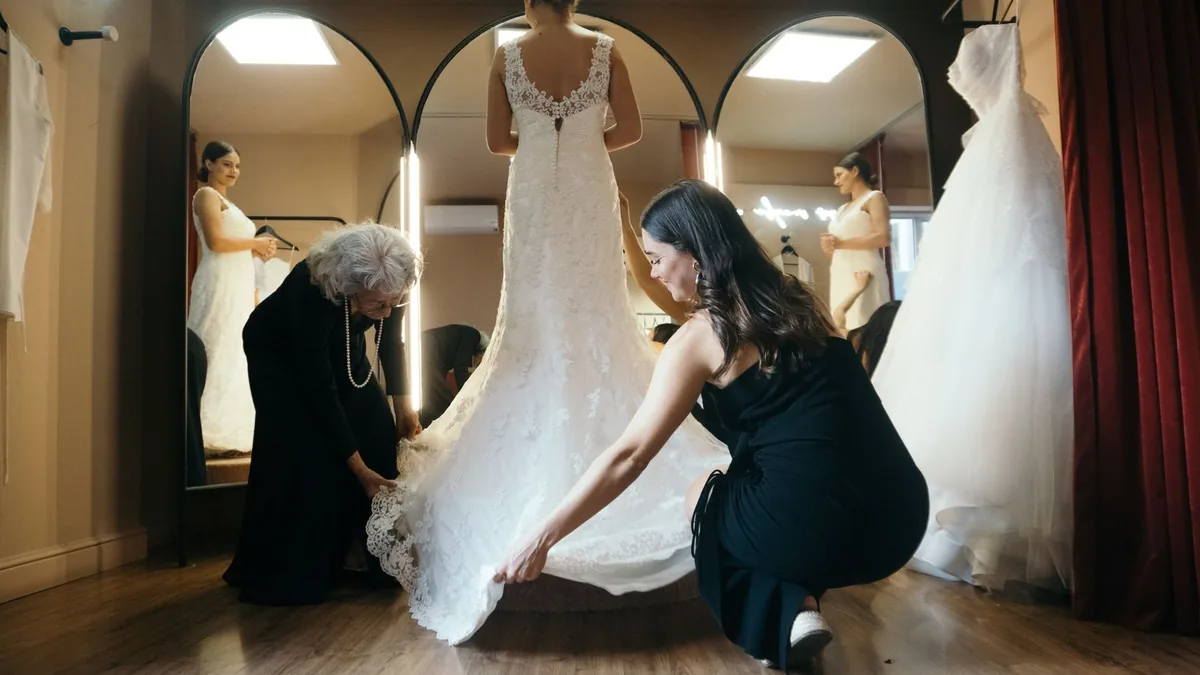
If the gown has a train, ask how you intend to manage it after the ceremony. Request an explanation of any proposed arrangement and how it is fastened. Consider who will assist you and whether that person can attend the handover. The design should be understandable to the people using it rather than becoming a puzzle during the reception.
Coordinate cleaning with the alteration plan
If cleaning is needed, ask the alteration and cleaning specialists about the appropriate sequence for that garment. Do not assume a previously worn dress should undergo an arbitrary process before inspection. Identify existing marks or damage at intake and record what each service addresses. Cleaning and alteration are separate scopes even when arranged through one shop.
Build a realistic fitting calendar
Share the event date, travel plans and any earlier date you need the dress in hand. Ask about the proposed fitting sequence and when decisions must be final. Avoid adopting a universal timetable from another bride's story. The garment, requested changes and shop's current workload determine the actual arrangement, which should leave room to assess the completed work.
Request an itemized alteration proposal
Ask the shop to list agreed changes, relevant materials and charges. Find out which items remain estimates pending further assessment. A basic hem offer is not comparable with a redesign including multiple layers and detailed embellishment work. Use the defined scope to compare providers instead of treating the lowest initial figure as a promise for every possible change.
Agree how additional work is approved
Ask the specialist to contact you before performing changes outside the authorized scope. Record decisions made at each fitting, especially when they affect cost or appearance. If an idea is still tentative, mark it as undecided. Clear approval prevents a casual discussion of possibilities from being mistaken for permission to make a permanent alteration.
Inspect the final garment at collection
Allow time to try on the gown and review the agreed changes with the specialist. Ask how any closures or train arrangements work and what care instructions apply. Raise a concern before leaving rather than relying on a quick look at the garment on a hanger. Keep the invoice and alteration notes together with any agreed follow-up plan.
Plan transport and event-day handling
Ask for packing and handling advice appropriate to the finished gown and your journey. Decide who will carry it and where it will be stored before dressing. Avoid improvised heat or cleaning treatments shortly before the event. A clearly labeled handover kit and a person familiar with the fastenings can make preparation calmer without requiring further last-minute alterations.
Frequently asked questions
1. Can any wedding dress be altered to any size?
Do not assume that all garments offer the same alteration options. Construction, available material and requested design changes affect feasibility. Arrange an assessment and ask the specialist to explain practical limits before buying a dress based on an unsupported alteration promise.
2. Should I get a quote from photographs alone?
Photographs can help a shop understand the request or arrange an appointment, but they may not reveal construction and fit details. Ask which parts of the estimate are provisional and obtain a confirmed scope after the garment is assessed in person.
3. What should I bring to a fitting?
Ask the specialist about the intended shoes, undergarments and any accessories that affect the assessment. Keep those items consistent once the plan is established. Tell the shop about changes instead of assuming a measurement taken under different conditions remains suitable.
4. How many fittings will I need?
Ask the shop to propose a sequence for your garment and requested work. A simple adjustment and a substantial redesign can require different arrangements. Confirm when the final fitting and collection occur rather than relying on a fixed number from another person's experience.
5. Can the neckline be changed at the same appointment as hemming?
Discuss feasibility and the order of work with the specialist. A design alteration can affect fit and appearance beyond the visible area. List it separately in the proposal so you understand the scope, cost and decisions needed before work proceeds.
6. Should a secondhand gown be cleaned first?
Ask the relevant specialists about the sequence appropriate to the actual material and condition. Identify marks or damage before either service begins. Cleaning and alterations should have clear, separate expectations rather than being assumed to resolve the same concerns automatically.
7. How can I avoid surprise charges?
Request itemized changes, clarify provisional items and agree that additional work needs approval. Keep a record of new decisions at fittings. A clear scope makes it easier to distinguish a necessary change you authorized from a possibility discussed without a final decision.
8. What should I check besides appearance?
Discuss comfort, closures and movement relevant to your event. Ask how to use any train-management arrangement and whether an assistant should attend the handover. Looking good while standing still does not answer every question about wearing the finished garment for the day.
9. Is a rush alteration always available?
Confirm directly with the shop; do not assume availability. Explain the actual collection deadline and requested work. Ask whether a short schedule changes the feasible scope or price, and avoid booking a project whose timing leaves important decisions unresolved.
10. What should I keep after collection?
Save the invoice, agreed-change list, care guidance and any follow-up instructions. Keep appropriate accessories and fastening instructions with the gown. These records help you prepare for the event and explain the work accurately if another professional later needs to inspect it.
Sources and related reading
- David's Bridal: fitting and alteration planning. Provider-specific example; its guarantees and scheduling are not generalized to other shops.
- Indianapolis discussion: gown neckline, fit, hem and lining requests. Question context only.
- Indianapolis discussion: planning wedding dress alterations. No vendor endorsement is adopted.
- Browse relevant Indianapolis providers. Confirm the service and current availability directly.