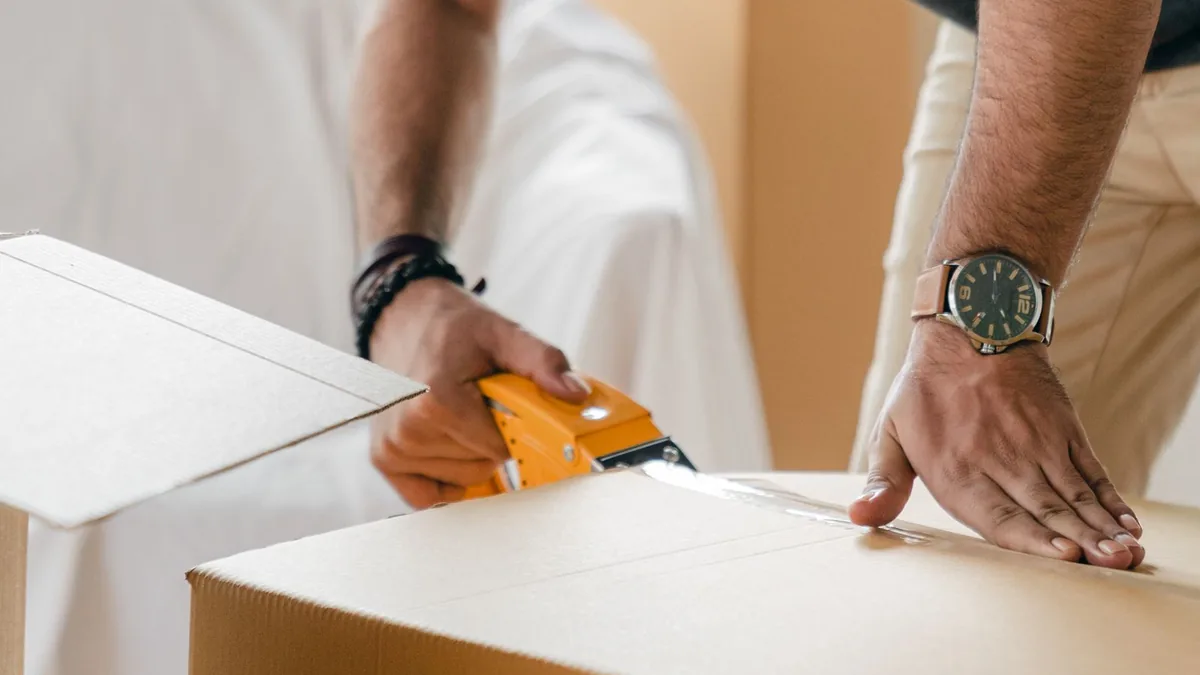
Hiring movers does not answer who packs the kitchen, protects a framed picture or reconnects a workstation. Packing is a separate planning decision. You can do everything yourself, buy a full packing service or assign selected items to a professional. The useful comparison is the work each option leaves you responsible for before and after the truck arrives.
Indianapolis residents have discussed hiring packing and unpacking help, including moves involving temporary storage. Those experiences suggest questions about scope; they do not establish that one option is always cheaper or that every mover accepts the same responsibility for owner-packed boxes.
Make a room-by-room packing list
List what needs boxing, what can travel as furniture and what requires particular care. Include cupboards, closets and storage spaces. A packing estimate based only on the main rooms may overlook a substantial amount of work. Identify items you intend to sell, donate or retain separately before requesting a detailed quote so the inventory reflects what will actually move.
Estimate your available preparation time
Be realistic about work, family commitments and the date the home must be ready. Self-packing can transfer effort away from the moving crew while placing it on you. Calculate whether you can finish comfortably and obtain supplies. A last-minute change from unfinished self-packing to professional packing may affect staffing and the schedule, so discuss a fallback before relying on it.
Ask what full packing actually includes
Request a written description of rooms, materials, fragile-item treatment and labeling. Ask whether the crew opens every storage area or only packs a specified inventory. Clarify what it will not pack. The words “full packing” should lead to a defined assignment rather than an assumption that every possession, including hazardous or restricted items, will be handled without further discussion.
Consider selective professional packing
A hybrid arrangement can assign fragile, awkward or time-consuming items to the mover while you handle straightforward belongings. Tell each estimator the same division of work. Ask whether the provider accepts that arrangement and how supplies and labor are charged. Keep the boundary clear so neither you nor the crew arrives expecting the other party to have prepared the same items.
Discuss fragile and unusual possessions
Point out glass, artwork, instruments, antiques and equipment that needs special preparation. Ask about the actual protective approach and whether a specialist is required. Do not assume a sticker saying “fragile” replaces suitable packing. If a possession has a documented condition issue, explain it before handling so the plan accounts for that limitation rather than discovering it during lifting.
Compare supplies as well as labor
Ask which boxes, cushioning and protective materials are included, separately charged or supplied by you. Find out what happens to unused materials. Compare equivalent quantities and responsibilities instead of only the hourly packing price. Obtain the provider's preparation instructions; improvising unsuitable containers can make loading harder and may complicate the agreement concerning owner-packed belongings.
Set rules for items that stay with you
Separate documents, daily necessities and belongings excluded from the truck. Ask the mover for its restricted-item policy rather than assuming ordinary household storage rules apply during transport. Keep your personal essentials clearly apart from areas the packing crew is assigned to clear. An organized separation prevents a helpful worker from packing something you need that evening.
Plan labels around the new home
Use destination-room labels rather than vague descriptions such as “miscellaneous.” Ask whether professional packers provide an inventory or numbered boxes and how you receive it. Choose a method you can use during unpacking. Labels help with placement, but they do not establish the condition of an item inside, so discuss documentation for important possessions separately.
Clarify responsibility for owner-packed boxes
Ask what the moving agreement says about items you pack and what documentation is required if a concern arises. Do not assume every protection option applies identically to all belongings. For interstate moves, review current FMCSA valuation guidance and the actual documents. Avoid treating a short statement that a mover is “insured” as an explanation of your options or exclusions.
Decide whether unpacking is part of the job
Unloading boxes, opening them, placing contents and removing packing materials are different tasks. Ask which are included. If you want shelves or cupboards arranged, describe that expectation explicitly. A professional unpacking service can require decisions from you on arrival, so plan who will direct placement and what areas need to be ready before the crew begins.
Protect the packing-day schedule
Ask whether packing and loading occur on the same day and what must be completed before either starts. Arrange children, pets and access appropriately. Tell the company promptly if your inventory changes. If you are still sorting possessions while packers work, establish how they identify items that should remain, avoiding conflicting instructions from several household members.
Choose a division of work you can complete
Summarize the packing assignment, materials, exclusions, timing and unpacking responsibilities before booking. Keep the list with the moving estimate. Browse moving and logistics providers, then ask directly about packing services for your belongings. A mover's transport capability does not automatically establish experience with every fragile item or a separate unpacking service.
Frequently asked questions
1. Is packing included whenever I hire movers?
Not automatically. Loading and transport may be the only services quoted. Ask about box packing, materials, furniture preparation and unpacking separately, and obtain the included tasks in writing before booking.
2. Can I pack most items and hire help for fragile things?
Many service arrangements can be discussed, but confirm acceptance with the business. List the items assigned to each party so the estimate, supplies and schedule reflect the same division of work.
3. Will self-packing always save money?
It may reduce purchased labor, but supplies, your time and unfinished preparation also matter. Compare complete arrangements rather than assuming the lowest packing charge produces the least expensive or easiest move.
4. Should I buy boxes before requesting an estimate?
First ask what the provider supplies and what containers it accepts. You can then avoid unnecessary purchases and obtain suitable materials for the belongings you have agreed to pack yourself.
5. Does a fragile label protect glassware?
A label communicates handling information but does not replace appropriate packing. Ask the mover how delicate belongings should be prepared and whether your particular items need additional professional treatment or special arrangements.
6. What if I am not finished when movers arrive?
Contact the company as soon as you know. Ask whether additional packing is possible and how it affects charges or timing. Do not assume a loading crew has materials or time for an unplanned packing job.
7. Does unpacking include putting everything away?
The scope varies. Opening boxes, arranging contents and removing materials can be separate tasks. Explain your expectations and ask which decisions you need to make while the crew is present.
8. How should I handle personal documents?
Keep important documents and immediate necessities in a clearly separate personal plan. Tell packers which areas or bags are excluded so essential items do not accidentally enter general moving cartons.
9. Are owner-packed belongings covered exactly like professionally packed items?
Read the actual agreement and protection terms. Ask the mover to explain exclusions and documentation requirements. Interstate valuation guidance provides context, but your specific arrangement still needs to be understood.
10. What should a packing quote specify?
It should describe the assigned inventory, materials, special items, timing, exclusions and unpacking tasks. Ask how changes are approved so additional cupboards or fragile possessions do not become an unclear extra assignment.
Sources and related reading
- Indianapolis discussion about packing and unpacking movers: question context only.
- FMCSA: understanding valuation and insurance options: interstate guidance.
- Explore Indianapolis directory information.