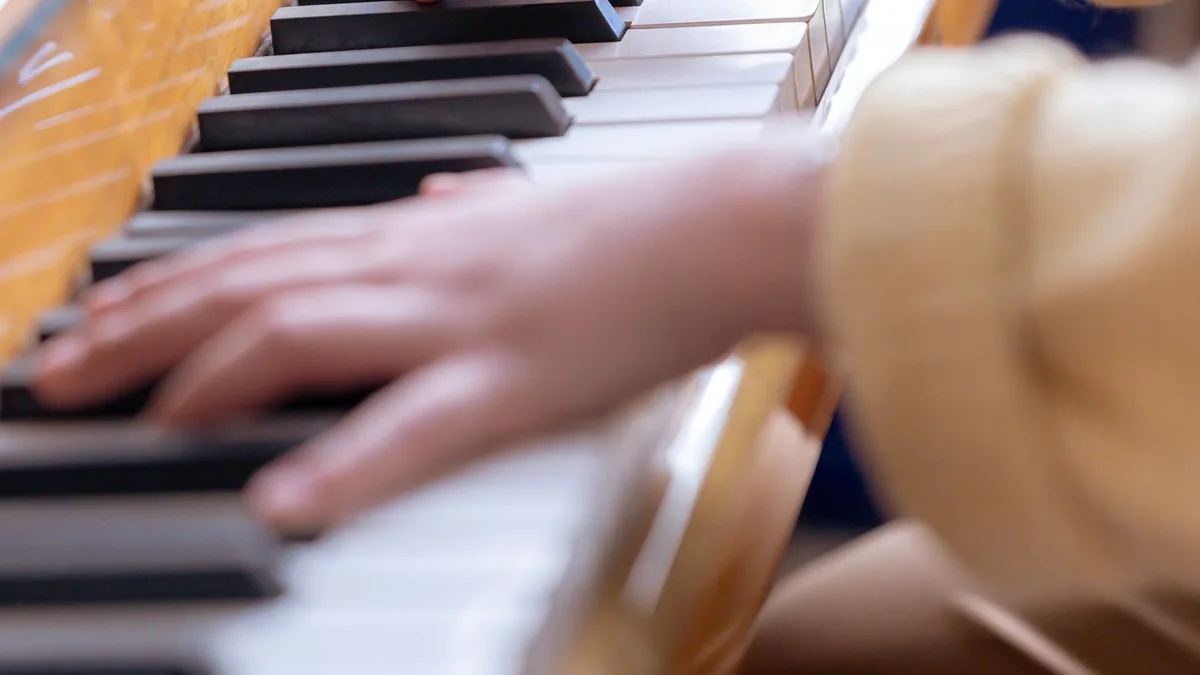
Returning to piano after years away is not the same as starting from nothing, and neither situation should be treated as a children's lesson with an older student in the chair. An Indianapolis discussion from an adult inheriting a family piano raised exactly this concern: finding beginner-friendly teaching that genuinely welcomes adults. A useful teacher search starts with what you want to play, what you remember and the practice arrangement you can sustain between lessons.
Describe why you want to learn
Tell a prospective teacher whether your priority is playing favorite songs, reading music, understanding accompaniment or working toward a particular repertoire. You do not need a polished musical ambition. A concrete description of what would make lessons enjoyable helps the teacher explain an approach and prevents an unspoken assumption that every adult wants the same kind of course.
Explain your previous experience honestly
Mention childhood lessons, singing, another instrument or any recent practice. Ask whether the first meeting includes an informal assessment and how the teacher adapts to uneven skills. You might remember some concepts and need help rebuilding others. Starting at an appropriate point is more useful than either dismissing your experience or promising an immediate return to your previous level.
Ask about adult teaching experience
Request examples of how the teacher works with adult beginners and returning players. Avoid assuming that strong performance experience automatically explains how lessons are structured for your situation. Ask how questions are welcomed and how priorities are set. The working relationship should make it possible to discuss difficulties without feeling that you are failing a course designed for somebody else.
Compare teaching approaches against your interests
Ask how the teacher combines listening, reading, technique and the music you hope to play. You need not choose an educational philosophy before attending. Instead, request a plain explanation of an early lesson and the reasoning behind the approach. A sample task or discussion can reveal more about the fit than a list of impressive terms on a website.
Review your instrument and practice access
Describe what instrument you have and where it is located. Before purchasing equipment, ask the teacher what is suitable for the proposed lessons and what limitations matter. If an inherited acoustic piano needs assessment, treat that as a separate service question. Owning a piano does not establish its current condition, and a lesson provider should not be assumed to inspect or repair it.
Discuss a sustainable practice routine
Explain work, family and noise constraints that affect practice. Ask how the teacher assigns manageable tasks and adapts when a week is unusually busy. A realistic plan should help you know what to work on between meetings without promising that one exact amount of practice produces identical progress for every learner. Avoid committing to a routine you cannot repeat.
Decide between studio, home and online lessons
Compare the actual instrument, travel, room privacy and communication in each arrangement. Ask what technology is needed for an online meeting and whether you can test the setup. Home visits may have a different travel charge or schedule. Choose the format that supports useful feedback and regular attendance rather than assuming convenience alone makes it suitable.
Confirm who teaches each appointment
If enrolling through a school, ask how teachers are assigned and whether you usually see the same person. Find out how substitutions or schedule changes are handled. A school's general reputation does not describe every individual teaching relationship. Request information about the actual teacher and a clear route for discussing a mismatch if the initial arrangement does not fit.
Understand materials and additional purchases
Ask what books, sheet music or other materials may be needed and whether they are included. Discuss appropriate, legitimate access to the music you will use. A modest lesson fee can be difficult to compare if one proposal includes materials and another does not. Avoid purchasing a large collection before the teacher has explained what serves your early goals.
Ask how progress is discussed
Request periodic conversations about what has improved, what still needs attention and whether your goals have changed. Progress can include clearer understanding and more confident practice, not only finishing a difficult piece. Be cautious about promises to master a complex repertoire by a fixed date. Ask the teacher to distinguish an encouraging goal from a guaranteed outcome.
Read attendance and payment policies
Confirm lesson length, payment schedule, missed-lesson rules and the process for ending enrollment. Butler Community Arts School publishes its own policies, illustrating why program-specific terms should be read rather than assumed. Do not apply one school's deadlines to another provider. Ask for the policy that governs the actual lessons and any ongoing commitment before paying.
Use the first lesson to test the match
After the first meeting, ask yourself whether the explanation was understandable, the task was appropriate and you know what to practice next. Discuss concerns early rather than accumulating lessons that leave you uncertain. Browse education and fitness contacts, then confirm adult piano teaching and current availability directly; a category listing alone does not establish either.
Frequently asked questions
1. Do teachers accept adults who cannot read music?
Some do; ask directly about the starting skills expected in the proposed course. Explain what experience you have and what you want to learn. A teacher who regularly works with adult beginners can describe how reading and other skills fit into the lessons.
2. Should I restart at the beginning after a long break?
Ask for an assessment rather than making that decision solely from the time elapsed. You may remember some areas and need support in others. An appropriate starting plan can respect previous experience while rebuilding skills that are no longer comfortable or consistent.
3. Do I need an acoustic piano before booking?
Ask the teacher what practice instrument is suitable for the proposed approach. Describe your existing equipment before buying anything. Requirements and limitations should be explained for your goals; owning an acoustic instrument is not a substitute for checking its current condition and usability.
4. Are online lessons suitable for a beginner?
Discuss the teacher's online approach, camera and sound setup, and how feedback is given. A trial of the technology can help. Compare the actual teaching experience with an in-person option rather than assuming that either format is automatically right for every new learner.
5. How much practice should I promise?
Explain the time and environment you can realistically maintain, then ask the teacher to set appropriate tasks. Avoid adopting an ambitious schedule simply to appear committed. A repeatable routine and clear instructions are more useful than a promise that routinely becomes impossible.
6. Can I learn only the songs I enjoy?
Tell the teacher your interests and ask how those pieces fit into a wider learning plan. Some supporting skills may help you approach the music more confidently. Decide whether the proposed balance suits you rather than assuming that either unrestricted choice or a fixed syllabus is mandatory.
7. Is a trial lesson worth requesting?
Ask whether one is offered and what it includes. Use it to understand the teacher's explanations, expectations and next-step plan. A trial is an opportunity to assess fit, not a guarantee that every aspect of a long-term relationship will be settled immediately.
8. What if my teacher changes at a music school?
Ask about substitutions and continuing teacher assignment before enrolling. Find out how goals and progress are communicated and whom to contact about a mismatch. A clear process helps preserve continuity without assuming that every replacement teacher will use an identical approach.
9. Should performance credentials decide my choice?
Consider relevant experience alongside the ability to teach your level and explain a workable plan. Ask about adult learners and observe the communication during a consultation. An impressive performance background does not by itself answer questions about lesson structure, feedback or everyday compatibility.
10. When should I review whether lessons are working?
Agree on a reasonable early check-in with the teacher and revisit goals periodically. Look for understandable feedback and a clear practice direction rather than an arbitrary repertoire deadline. Raise concerns about pace, materials or communication while there is still an opportunity to adjust the arrangement.
Sources and related reading
- Indianapolis discussion: beginner-friendly piano teaching for adults. Question context only.
- Butler Community Arts School: policies and procedures. Provider-specific example; its terms are not presented as a citywide rule.
- Butler: community arts instruction including adults.
- Browse relevant Indianapolis providers. Confirm the service and current availability directly.