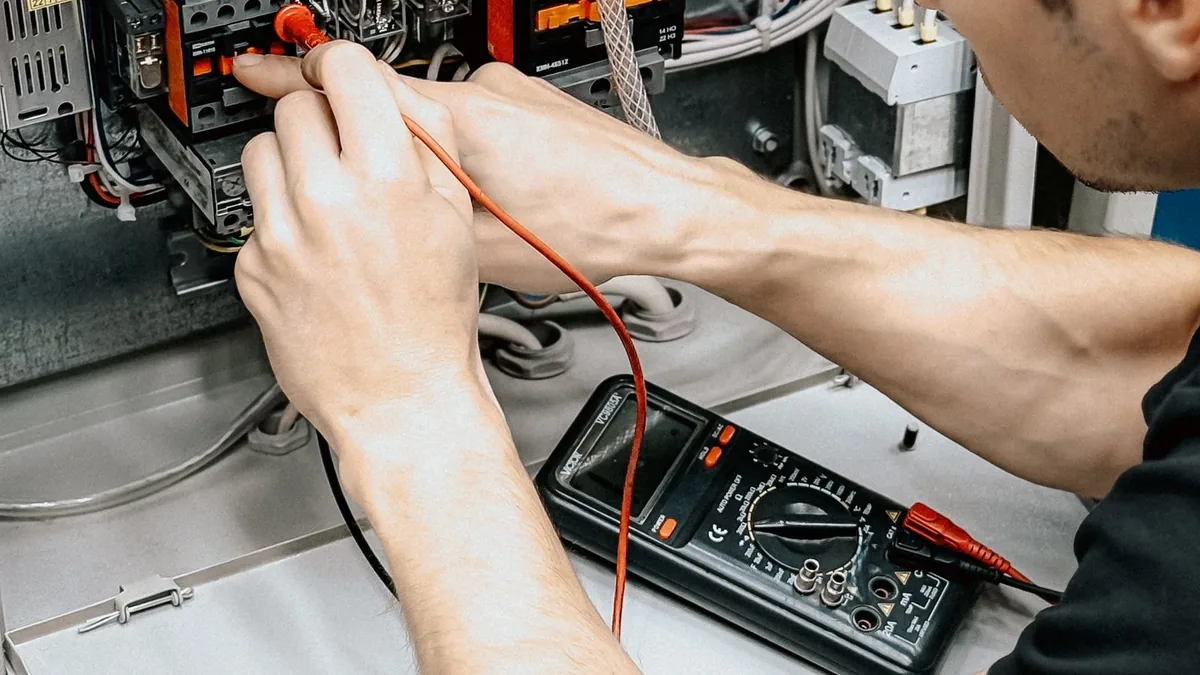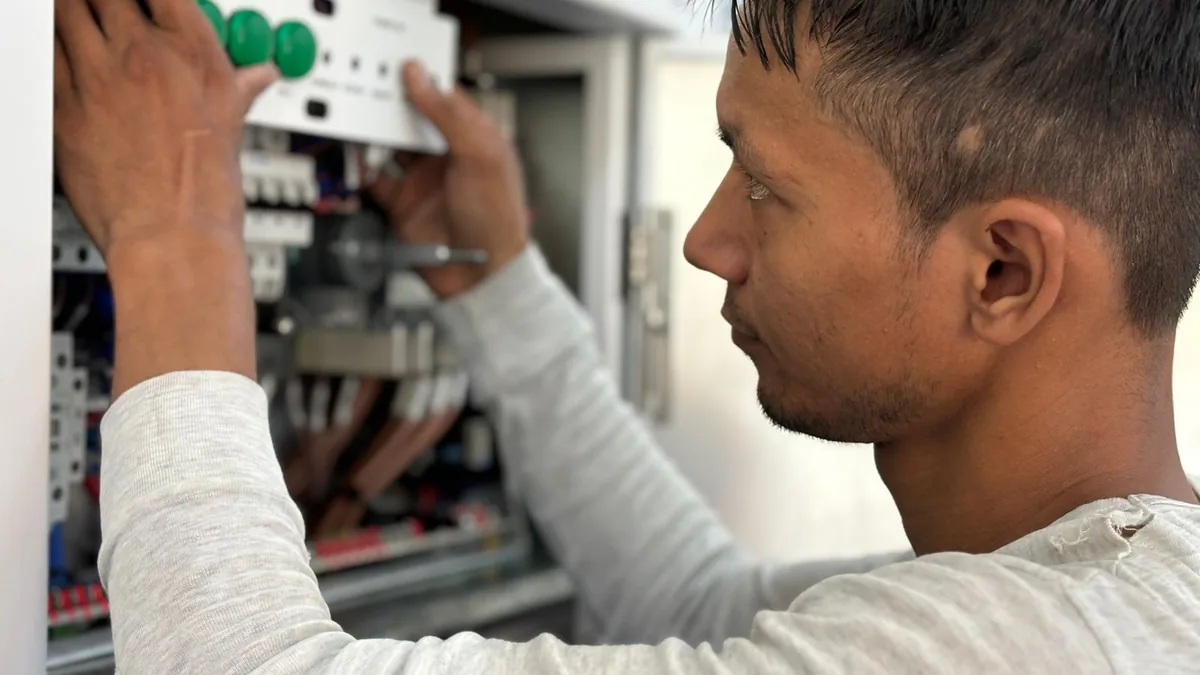
A breaker that repeatedly trips is a reason to arrange assessment, not an invitation to keep resetting it until the interruption disappears. Tell the electrician what was happening, which area lost power and whether there were other warning signs. Those observations help define the appointment without requiring a homeowner to diagnose wiring or open an electrical enclosure.
This guide is about selecting and preparing for professional service. It does not instruct you to replace breakers, alter protection or test exposed conductors. For an Indianapolis home, confirm that the provider handles the actual complaint and can explain its diagnostic terms, operating precautions and authorization process before further work begins.
Treat warning signs as a safety concern
Smoke, sparking, burning odors or an immediate threat need appropriate emergency attention. Keep people away from affected equipment and do not touch damaged or wet electrical components. Explain the warning signs when seeking help. A repeated interruption without visible damage still deserves assessment, but an active hazard should not be booked as an ordinary future convenience appointment.
Stop repeated reset experiments
Do not defeat a protective device or repeatedly reset it to force equipment to operate. Report the pattern and seek professional guidance. A reset history can be useful information, but further experimentation is not necessary to prove that a problem exists. Tell the electrician what has already happened so the assessment starts with an accurate account rather than a guessed failed component.
Describe which area lost power
Identify affected rooms and devices from ordinary observation. Explain whether the interruption is limited to one area or appears to involve more of the house. Do not remove covers to trace circuits or assume that an old panel label is complete and correct. Ask the professional to establish the affected scope and document any relevant identification work during the visit.
Record the timing and normal activity
Note whether the interruption occurred when an appliance started, during another routine activity or without an obvious pattern. Include recent changes such as new equipment or building work. These facts guide questions, but they do not establish the cause. Avoid blaming a particular appliance solely because it was present when the interruption first became noticeable.
Distinguish a utility interruption from a circuit complaint
If broader service trouble is suspected, contact the actual utility using its current reporting guidance. AES Indiana publishes outage and safety information for its customers. A private electrician and utility may address different parts of the problem. Do not assume that a neighborhood has normal service simply because one nearby window is lit or another resident reports no outage.
Prepare safe background information
Provide accessible equipment labels, prior electrical invoices and a clear description of the property. Photographs should be taken only without opening an enclosure or approaching a hazard. Tell the provider about access restrictions and any equipment that must remain unavailable. A useful service request supplies context while leaving internal inspection and testing to a qualified professional.
Agree on diagnostic attendance terms
Ask what the first visit includes, how findings are reported and whether further testing requires authorization. Clarify after-hours charges and any minimum attendance fee. A clear commercial agreement does not establish technical quality, but it makes the visit easier to understand. Avoid assuming that a quoted visit price includes every repair or extended investigation that might later be recommended.
Ask for the observed cause and uncertainty
Request a plain-language explanation of the findings and the proposed remedy. If the cause remains uncertain, ask what additional assessment would resolve it. A symptom should not automatically become a breaker-replacement sale. The report should distinguish what was confirmed from what is suspected and identify any operating precautions that apply while the next step is arranged.
Clarify any panel recommendation
If broader panel work is proposed, ask which findings support it and whether the original circuit complaint is fully addressed by that scope. Request explanation of compatible components and applicable requirements without trying to choose electrical protection yourself. A major proposal should identify the actual condition and necessary work rather than relying only on a general statement about older houses.
Separate repair from optional additions
An appointment may reveal opportunities for new outlets or other improvements. Keep those options distinct from the work needed to address the repeated trip. Ask for separate scope and pricing where useful. This prevents a necessary diagnostic decision from becoming a confusing bundle of upgrades and allows you to choose optional work after understanding the original problem.
Request completion checks and instructions
Ask what professional checks establish that the agreed repair is complete and what limitations remain. Get instructions about normal operation and what to do if the interruption returns. Do not resume use of equipment restricted as unsafe without appropriate professional clearance. Keep the repair record so a recurrence can be discussed using the previous findings rather than repeating an unsupported assumption.
Choose ongoing service with clear responsibilities
Confirm the business identity, relevant credentials and service coverage for your Indianapolis address. Ask who handles follow-up and how any labor commitment applies. Directory inclusion is not a verified diagnosis or endorsement. A useful provider explains the assessment, remedy and remaining questions so you can make an informed authorization decision instead of relying on a generic online troubleshooting list.
Frequently asked questions
1. Should I keep resetting the breaker?
Do not repeatedly reset a protective device to force operation. Describe the pattern and seek qualified assessment. If there are immediate hazards, keep away and obtain appropriate emergency help rather than continuing to test the affected equipment.
2. Does a trip prove the breaker is defective?
No. Treat it as a symptom requiring professional assessment. Ask what findings support the proposed remedy and whether another condition remains unresolved. A replacement recommendation should explain more than the fact that the breaker operated.
3. Can I photograph the panel?
Only take an ordinary accessible view from a safe position without removing covers or approaching damaged equipment. Do not expose wiring to collect information. The professional can obtain internal evidence using appropriate procedures during the assessment.
4. Should I call the utility?
If broader or partial service trouble is suspected, follow the actual utility’s current reporting process. Explain what is affected. A utility and private electrician may have different responsibilities, so ask which next step is appropriate rather than guessing the fault location.
5. What information helps the electrician?
Describe affected areas, timing, normal appliance activity, recent changes and warning signs. Include previous relevant service records. A factual history is useful even when you do not know the technical cause and should not require unsafe investigation.
6. Will the first visit include the repair?
Ask when booking. Attendance, diagnosis and repair can be separate charges or stages. Clarify authorization for additional work and the expected written findings so an initial visit price is not mistaken for an unlimited repair agreement.
7. Does this mean I need a new panel?
Not automatically. Ask which observed conditions support broader work and whether the original complaint is addressed. A panel proposal should be documented and property-specific rather than based only on age or an anonymous online opinion.
8. Can I replace a breaker myself?
This guide does not provide internal electrical-work instructions. Arrange qualified service and applicable approvals. Choosing and fitting protective equipment requires assessment of the actual installation, not simply matching an appearance or a number seen online.
9. What if the interruption returns?
Keep people away from any hazard and contact the provider with the invoice and new observations. Ask how follow-up terms apply. A recurring symptom deserves assessment rather than repeated resets or automatic repetition of the same part replacement.
10. What should the service record show?
Keep the findings, completed work, relevant checks, restrictions and follow-up terms. These records help another professional understand what was established and which questions remained unresolved, especially if the problem later changes or recurs.
Sources and related reading
- Electrical Safety Foundation: home electrical warning signs
- Electrical Safety Foundation: wiring safety
- AES Indiana: outage safety for its service customers
- Find relevant providers and confirm the specific service directly.
Sources provide general context, not a diagnosis or endorsement. Community discussions, where linked, identify questions rather than verified property conditions. Manufacturer instructions and site-specific professional findings govern the work.