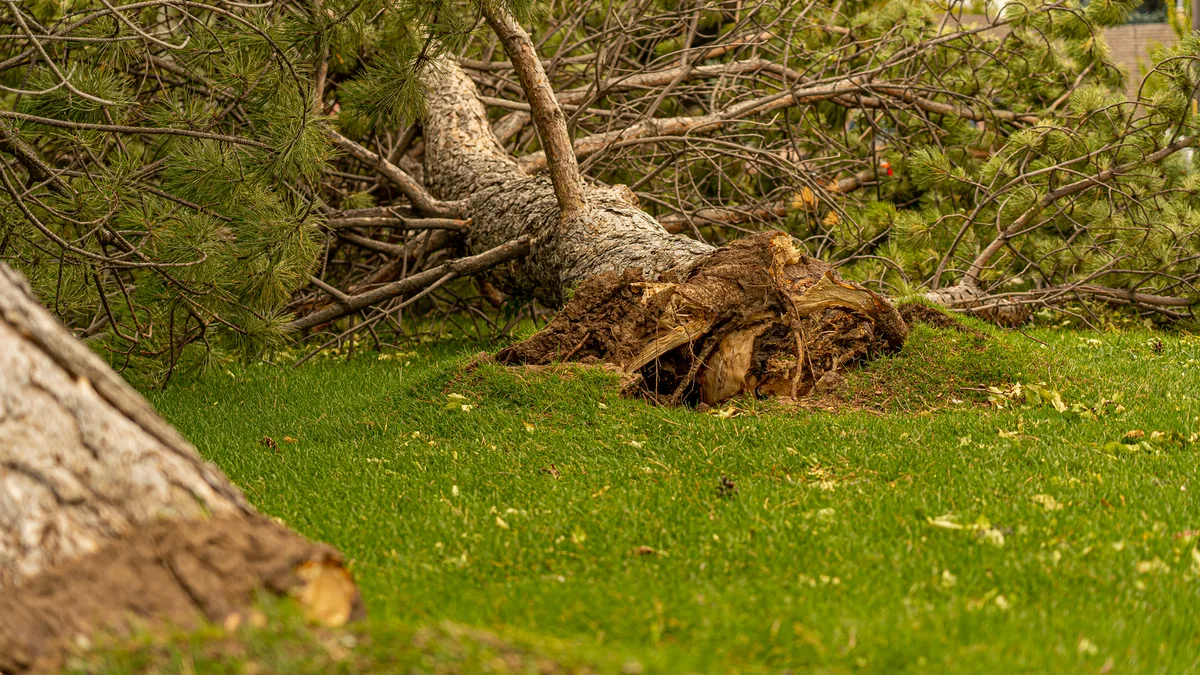
A large branch on the ground can leave a homeowner with two different questions: how to remove the debris and whether the remaining tree needs assessment. Treat those as separate decisions. A crew that clears the yard has not necessarily evaluated the canopy, and a quick quotation is not automatically a documented tree-risk assessment.
An Indianapolis resident asked about a mature tree after a substantial branch fell during a storm. The discussion captures a real service-selection problem without proving that the whole tree must come down. This guide focuses on safe communication and professional assessment rather than instructions for cutting damaged limbs yourself.
Keep the affected area clear
Avoid standing beneath damaged branches or entering an area where a tree's condition is uncertain. Keep other people and pets away as appropriate. Do not climb, pull hanging material or start cutting to improve the view. If there is an immediate threat to personal safety, seek emergency assistance instead of treating the situation as a routine quote request.
Report possible utility involvement
If branches or the tree may involve electrical lines or other utility equipment, keep clear and contact the relevant utility or emergency service. Do not assume a line is harmless because it appears still or the lights are out. Tell the tree provider about the concern, but do not ask an ordinary cleanup crew to bypass the utility's instructions.
Describe what happened without diagnosing it
Give the approximate event time, the affected tree's location and what you can see from a safe place. Existing photographs may help. Distinguish a fallen branch from a leaning tree or material resting on a building. The professional needs factual observations rather than a homeowner's guess that the tree is healthy or certain to fail.
Ask for assessment of the remaining tree
Clarify whether the appointment includes examining the remaining tree or only pricing visible debris. Ask who performs the assessment and what written explanation is available. ISA describes arborists as trained professionals for tree-care decisions. Verify an individual's relevant credentials directly rather than assuming every company using the term tree service provides the same assessment.
Separate immediate work from later decisions
Ask what the provider considers urgent and what can be assessed after the immediate area is made safe. A limited first visit may be appropriate, but its boundary should be clear. Do not let an emergency cleanup authorization silently become consent to remove every tree nearby or undertake unrelated landscape work.
Request the reasoning for pruning or removal
Ask what observations support the recommended scope and what alternatives were considered. A proposal should distinguish specific damaged material from a broader recommendation about the tree. You do not need to direct the pruning technique, but you should understand the purpose and limits of the service before authorizing permanent work.
Clarify access and equipment needs
Explain gates, neighboring structures, narrow driveways and other known constraints. Ask what areas equipment needs and how surfaces will be protected. Do not move damaged material or park underneath it to create access. The provider should plan the method safely and explain any separate permissions required for the intended route.
Keep property and neighbor questions explicit
Tell the contractor if ownership or boundaries are uncertain. Obtain appropriate advice or authorization before work depends on accessing another property. This guide does not decide liability for a fallen branch or interpret local tree law. Separate the practical safety response from financial or ownership questions that require their own documentation.
Define debris handling
Ask whether the price includes cutting, moving, loading and removing all agreed material, or leaving some wood on site. Describe exactly where retained pieces may be placed. Stump work, soil repair and lawn restoration may be separate. A phrase such as complete cleanup should be translated into a finished condition both parties understand.
Check insurance and contracting information
Ask the business for current coverage information relevant to the proposed work and verify details as appropriate. Confirm the contracting entity and contact person. A directory listing, vehicle logo or neighbor recommendation is not independent proof of insurance. Keep the actual estimate and authorization rather than relying only on an informal message.
Document possible building damage separately
If the event affected a roof, fence or other structure, ask the appropriate professional to assess that damage. Tree removal and building repair may require different scopes. Keep photographs already available and contact an insurer if relevant, without assuming coverage. Do not delay urgent safety measures simply to preserve a perfect set of images.
Request a clear completion record
Keep the invoice, agreed scope, assessment findings and follow-up advice. Record what was removed and what remains to be reviewed. If further tree monitoring is recommended, ask who provides it and what would prompt another visit. A documented handover helps avoid interpreting a cleared yard as a guarantee that no future tree issue can occur.
Frequently asked questions
1. Does a fallen branch mean the whole tree must go?
Not automatically. Ask a qualified tree professional to explain the condition of the remaining tree and the basis for any recommendation. A branch on the ground establishes that an event occurred, but it does not by itself determine the correct scope for every part of the tree.
2. Can I clear small pieces before the contractor arrives?
Keep out of areas with uncertain tree stability, hanging material or utility concerns. Ask the responding professional what access is safe. This article does not assess your site or authorize cleanup beneath a damaged canopy. Convenience should not override the need to keep people away from possible hazards.
3. Who handles a tree touching a power line?
Keep clear and contact the relevant utility or emergency service for instructions. Do not touch the tree, line or nearby equipment. Tell any tree company about the involvement before attendance so it can coordinate appropriately rather than treating the job as ordinary yard debris removal.
4. Is a cleanup quote the same as a tree assessment?
No. Ask what the visit actually includes and who evaluates the remaining tree. A crew may price the fallen material without offering a broader assessment. Request the findings and limitations in writing so you understand what has and has not been considered after the yard is cleared.
5. Should I hire an arborist?
For decisions about a damaged mature tree, ask about a professional's training and relevant assessment experience. ISA provides consumer information and credential verification resources. Do not infer qualifications solely from a general business category; confirm the individual and service that will actually be provided at your property.
6. Can the company guarantee the tree will never fail?
Be cautious about absolute guarantees. Ask what was assessed, what limits apply and what follow-up is recommended. Tree-care guidance can support a decision but does not eliminate every future uncertainty. A useful report explains the recommendation rather than promising that no storm can ever cause another problem.
7. Is stump grinding part of removal?
Check the proposal. Removing a tree, handling debris and addressing a stump are separate tasks that may be bundled or separately priced. Ask about the finished condition and any surface restoration. Do not assume the word removal includes every below-ground or landscaping activity you might want afterward.
8. Will my insurer pay?
Coverage depends on the actual policy and circumstances. Contact the insurer with factual records and ask what documentation is required. A tree company or directory article cannot determine coverage from a brief description. Keep tree work and building repair scopes identifiable for any review.
9. Who is responsible if a neighbor's tree is involved?
This article does not decide ownership, liability or payment obligations. Document observations and obtain appropriate advice before authorizing work that affects another property. An immediate safety concern and a later financial dispute are different questions; address each through the relevant professional or authority.
10. What should I retain after the job?
Save the scope, invoice, assessment findings, photographs supplied by the provider and follow-up recommendations. Note any work deliberately deferred. These records help a later professional understand what happened and prevent a limited cleanup visit from being remembered as a broader assurance about every tree on the property.
Sources and related reading
- Indianapolis storm-damaged tree discussion.
- International Society of Arboriculture: choosing trained tree care.
- Find relevant directory contacts. Confirm the exact service with the business.
Prepared as consumer decision guidance, not a diagnosis, engineering plan, legal opinion or guarantee of project results. Public discussion supplies question context, not independent proof about vendors or every Indianapolis property.