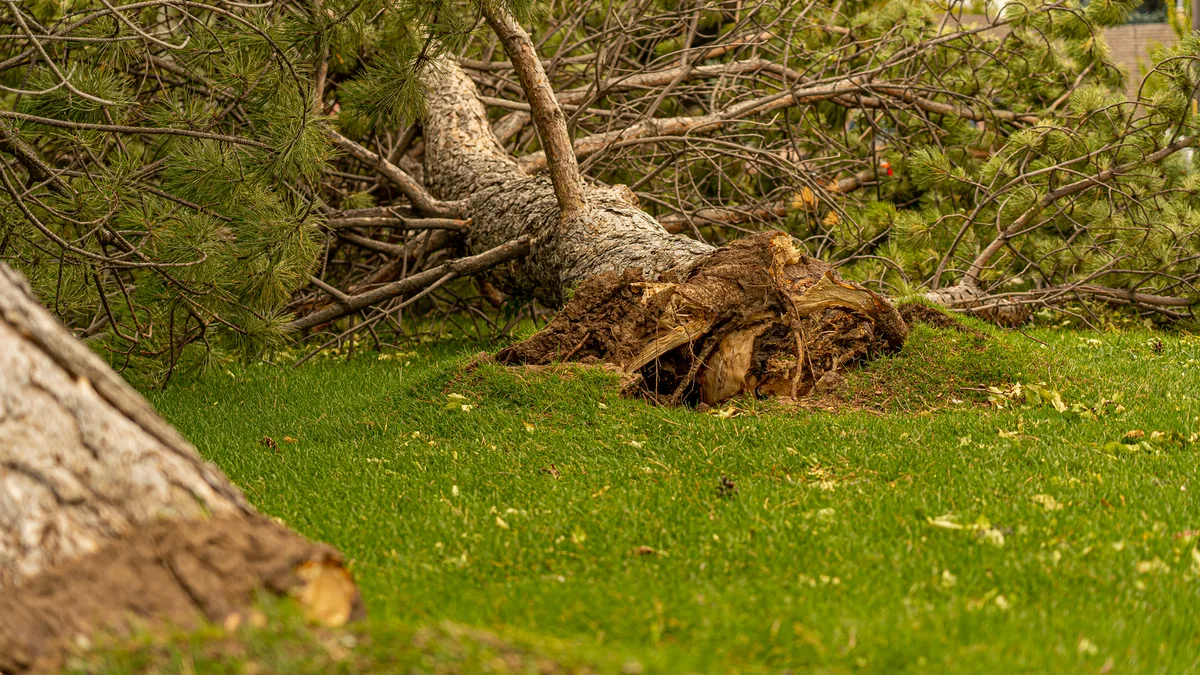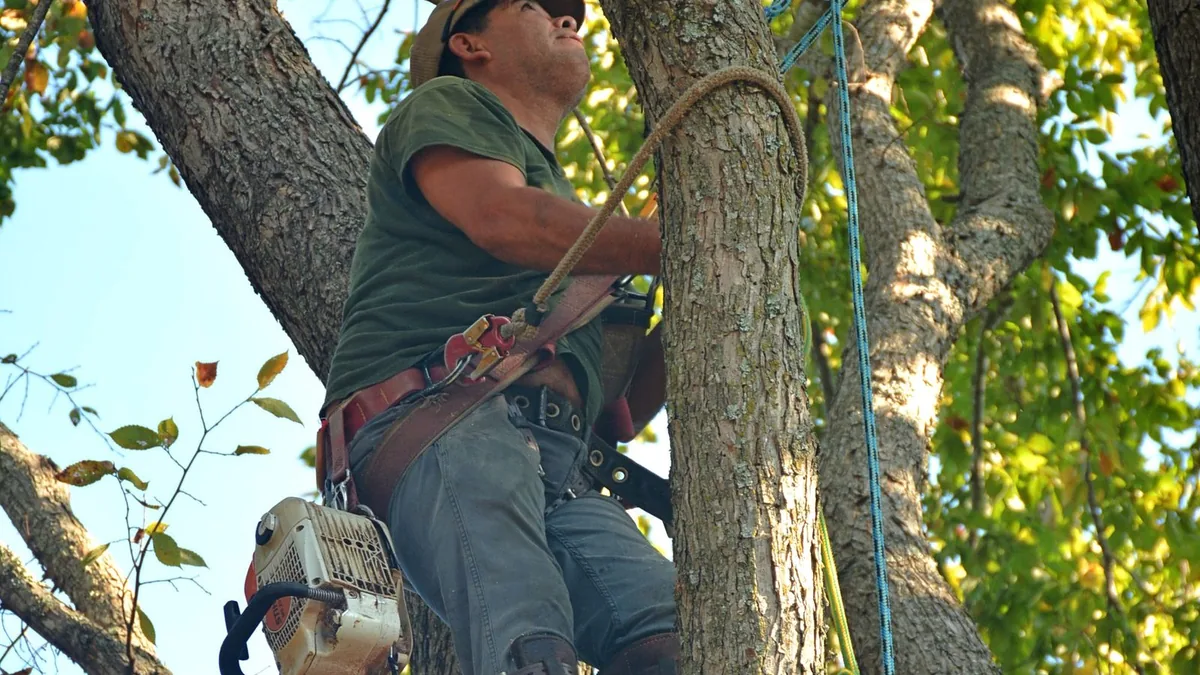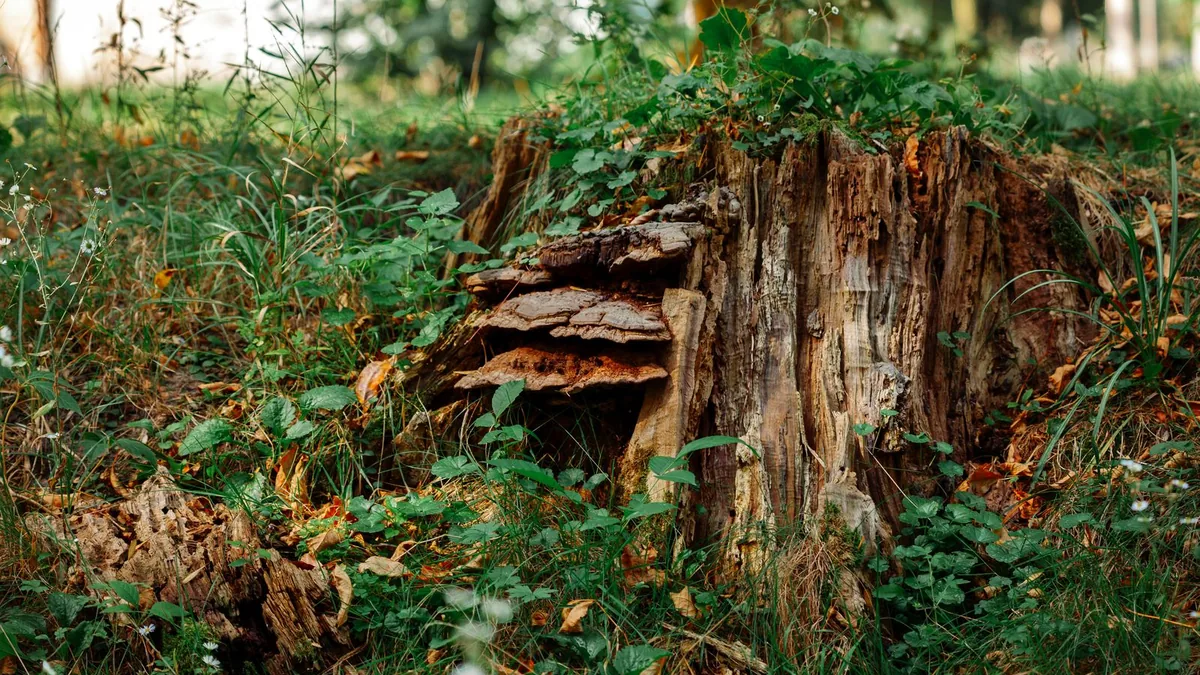
Tree removal and stump work are different parts of a property project. Before accepting a stump-grinding quote, explain what you want to do with the space afterward. A lawn repair, a new planting area and a construction site can create different questions about the remaining ground. The phrase remove the stump is too vague to settle all of them.
Indianapolis tree-removal discussions raise questions about competent work and complete cleanup. This guide extends that service-selection concern to the stump stage; it does not claim a separately verified local stump trend. The focus is a clearly defined professional service, not instructions for operating grinding equipment yourself.
Identify every stump in the scope
Mark the stumps to be assessed and give their locations relative to access routes and structures. Ask the provider how it measures and describes the work for quoting. Do not assume a price for one visible stump includes others hidden by vegetation. A clear inventory helps prevent confusion when different crews attend different stages of the tree project.
Explain the intended future use
Tell the contractor whether the area will become lawn, a planting bed or part of a building or paving project. Ask what assessment that future use requires beyond grinding. Do not assume a finished surface is ready to support construction simply because the visible stump has gone. Coordinate with the professional responsible for the later installation.
Separate grinding from broader removal
Ask what material the service removes and what remains outside its boundary. Different proposals may describe grinding, excavation or another scope that is not directly interchangeable. You do not need a DIY method description; you need an understandable statement of the expected result and limits before comparing prices or authorizing work.
Define the depth and extent in writing
Ask the provider to specify the agreed work relative to the site and intended use. A general promise to grind below ground does not establish a complete construction preparation standard. If a later contractor requires a different result, resolve that before the grinder arrives. Avoid relying on an arbitrary depth quoted in an unrelated discussion.
Review access for the actual equipment
Measure and describe gates, narrow passages, slopes and surface constraints with the provider. Ask whether the proposed equipment can reach the work without unwanted damage. A phone estimate may depend on assumptions about access. Clarify how the price or method changes if the site differs from those assumptions before committing to attendance.
Identify known buried and private features
Tell the contractor about irrigation, lighting, invisible fencing, private wiring and other relevant features. Ask how appropriate locating and protection are handled before ground work. Do not assume every private line is included in a general utility-location process. The provider should explain its requirements rather than asking you to guess where everything lies.
Discuss nearby trees and structures
Point out roots, retaining features, fences and structures close to the stump. Ask whether another assessment is needed to protect something you intend to retain. Grinding should not become an excuse to cut or disturb adjacent material without understanding consequences. Keep the scope focused on the assessed work rather than an open-ended clearance instruction.
Clarify what happens to grindings
Ask whether the service leaves the resulting material, redistributes it within an agreed boundary or removes it. Confirm whether loading and disposal are included. A visually different pile after grinding is not automatically an incomplete job if that was the agreed scope. The important point is knowing the finished condition before the work starts.
Specify backfill and surface restoration
Find out whether filling, leveling, soil supply, seed or sod are included or separately arranged. Ask who assesses suitability for the intended next use. A tree crew may reasonably provide only stump work, but the household should not discover afterward that restoring the area requires another contractor and an additional budget.
Ask about follow-up conditions
Discuss what observations after the work should be reported and what follow-up the provider offers. If the later landscape stage is separate, obtain the next contractor's requirements. Do not assume one grinding visit guarantees that the ground can never change. Keep expectations linked to the documented scope rather than an undefined promise of permanent perfection.
Compare complete written offers
List stump count, boundaries, access, material handling, restoration and exclusions side by side. Obtain current prices for your property. Old forum amounts or another homeowner's small stump are not offers for your work. Ask providers to explain differences in scope without assuming either the lowest or highest total independently proves quality.
Keep before and after records
Save the estimate, authorization, photographs safely taken and invoice. Note which areas were deliberately excluded and what remains for a later professional. If a problem appears during the next project, these records help explain what was purchased. A documented handover is more useful than relying on the broad phrase stump removed.
Frequently asked questions
1. Is stump grinding included in tree removal?
Check the actual proposal. Tree removal, debris handling and stump work can be separately priced or bundled. Ask for the finished condition in writing. A company offering all three does not make every service automatically part of a quotation that only describes taking down the tree.
2. Does grinding remove every root?
Ask the provider to define what the proposed work removes and what remains. Do not assume that eliminating the visible stump means all underground material disappears. The answer matters particularly if another contractor plans construction, excavation or planting in the same area after the tree work.
3. How deep should the work go?
Define that with the relevant professional based on the site and intended future use. This guide does not prescribe a universal depth. A lawn restoration and a construction preparation task can need different assessments, so agree on the requirement before comparing otherwise similar-looking grinding offers.
4. Can I build over the area immediately?
Ask the professional responsible for the planned construction to assess what preparation is required. A grinding invoice is not an engineering approval or guarantee of ground suitability. Coordinate the stages before purchasing them so the second contractor does not inherit an unresolved assumption about the first service.
5. Who removes the pile of grindings?
The agreement should say. Some scopes may leave material on site while others include loading and removal. Ask where retained material will be placed and whether disposal charges are included. Knowing the boundary beforehand prevents a normal scope difference from becoming an avoidable complaint after attendance.
6. Does the price include soil and seed?
Not necessarily. Ask about backfill, leveling and landscape restoration separately. If another provider handles them, understand its assessment and schedule. A low grinding-only price should not be compared with a complete restored-lawn offer as though both deliver the same finished property condition.
7. What access information should I provide?
Describe gates, slopes, narrow passages, fragile surfaces and nearby structures. Ask the contractor what measurements or photographs are useful. Do not remove safety barriers or disturb the stump to make access appear easier. The provider should confirm a safe method for the actual site.
8. Are private underground lines important?
Yes; disclose known irrigation, lighting, pet fencing and similar features and ask how they are protected. Do not assume an ordinary utility-location request identifies every private installation. Clarify responsibility and any additional locating needs before machinery works around a route that may not be visible.
9. Can I compare quotes just by stump diameter?
That may be one input, but access, extent, debris handling and restoration also affect the service. Ask each bidder to describe the same intended result. A single measurement does not establish that two prices include identical work or accommodate the same constraints at your property.
10. What should I save for the next landscaper?
Keep the agreed boundaries, invoice, photos and any notes about remaining material or exclusions. Tell the next provider what future use was discussed. Those details help coordinate restoration or construction without assuming that a general stump-grinding service completed every possible site-preparation requirement.
Sources and related reading
- Indianapolis storm-damaged tree discussion.
- International Society of Arboriculture: choosing trained tree care.
- Find relevant directory contacts. Confirm the exact service with the business.
Prepared as consumer decision guidance, not a diagnosis, engineering plan, legal opinion or guarantee of project results. Public discussion supplies question context, not independent proof about vendors or every Indianapolis property.