A sump pump that will not seem to stop deserves attention, but the sound alone does not tell you whether the pump has failed. A useful first question is whether the water level is rising, falling, or staying roughly steady while the equipment operates. A second question is whether you hear one long run or many short starts. Those observations help a plumber distinguish demand from a control or discharge problem without treating every noisy pump as an automatic replacement sale.
In an Indianapolis community discussion during heavy rain, residents described continuous pumping, worry about outages, and uncertainty about their basement systems. That discussion is a reason to explain the decision clearly, not evidence that every Indianapolis home has the same groundwater conditions. Your property's drainage, pump installation and recent weather all matter.
Start with a safe observation point
Stay out of standing water near electrical equipment, outlets, cords or appliances. Do not reach into the pit, touch a wet plug or open an electrical enclosure to investigate the noise. If access is unsafe, describe what you can hear from a dry location and arrange professional help. The EPA's flood-cleanup guidance specifically warns against touching electrical equipment while it is wet or while standing in water.
If water is actively rising toward equipment or occupied rooms, tell the service provider that when requesting assistance. Ask whether emergency stabilization is available and what the initial visit includes. A future maintenance appointment and a current flooding response are different jobs.
Distinguish a long run from rapid cycling
A long run during heavy water entry
A pump may remain on because new water continues entering the basin. From a safe position, note whether the level is being controlled. A stable level can be a useful observation, but it does not prove that the pump is correctly sized or operating efficiently. Persistent heavy demand leaves less room for a second fault or a loss of power.
Repeated short starts
Frequent stopping and restarting is a different pattern. Report roughly how often it happens and whether water seems to return immediately after a stop. Do not diagnose the check valve from the sound alone. Switch behavior, basin conditions and the discharge arrangement all belong in a proper inspection.
Consider the water route before blaming the motor
A pump moves water through a system, not in isolation. The inspection should consider where water enters the pit, where it is discharged and whether the discharge can return toward the building. Ask the contractor to explain the proposed water route in plain language. A repair that makes the motor quieter without establishing where the water goes may leave the underlying problem unresolved.
An outdoor outlet can sometimes be observed safely from ground level. Record visible pooling or obvious damage without dismantling piping. Do not enter a flooded yard, climb a roof or disconnect a pipe while the system is needed. Discharge requirements must be checked for your property; do not assume a connection to a sanitary sewer is appropriate.
Ask for the float and control system to be checked
The float or other level-control device tells the pump when to operate. An obstruction, installation conflict or control defect can affect that process. The useful question for a service visit is not simply whether a switch was replaced, but whether the technician observed the complete start-and-stop sequence afterward.
Photograph the model label only if it is reachable from a safe, dry location. Existing equipment manuals can help the technician identify the intended clearances and controls. Do not defeat a switch or hold it in position to keep the pump running; that substitutes an unsafe workaround for diagnosis.
Include the check valve and discharge line in the diagnosis
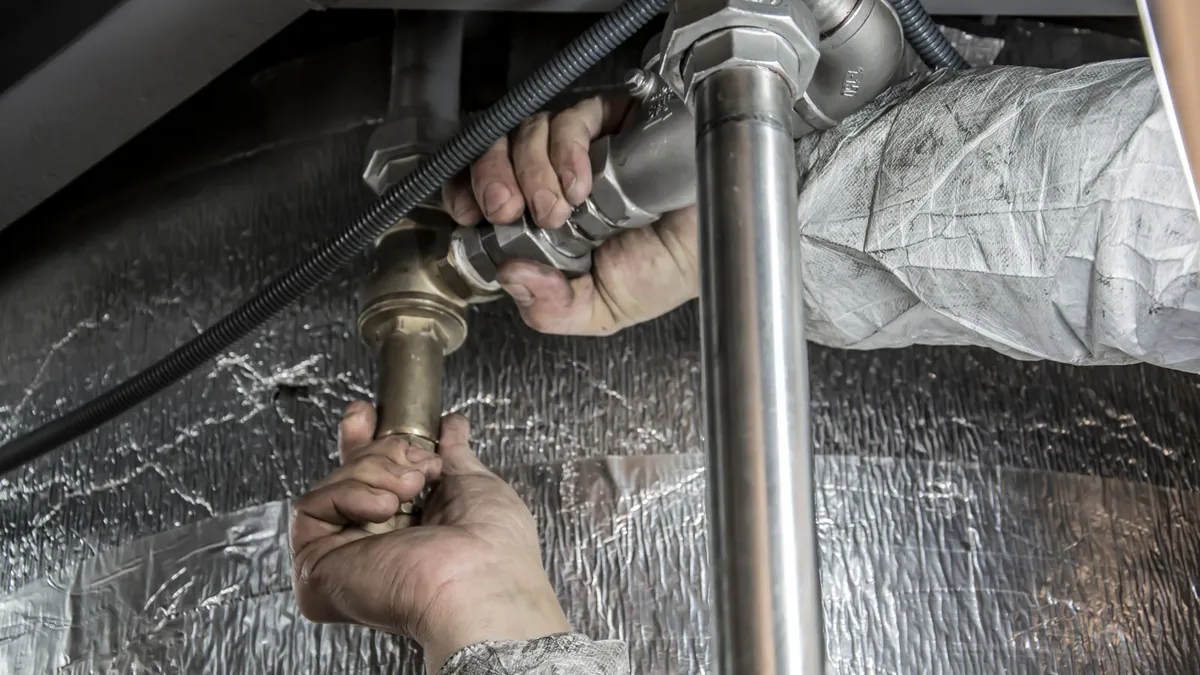
A check valve is intended to limit water flowing backward through the discharge arrangement. A blocked or restricted discharge can also affect pumping. These are inspection possibilities, not conclusions that can be reached from a short video. Ask what observations support the diagnosis and whether the whole connected path was examined.
If the estimate proposes pipe work, request the location, material, access assumptions and any necessary restoration in writing. Ask how the completed repair will be tested. A statement that a part was changed is less useful than a documented result showing the system moving water and cycling as intended under the test conditions.
Review outside drainage without creating another hazard
Ground-level observations of overflowing gutters, short downspout extensions or pooling beside the foundation can help identify questions for the visit. They do not establish that the house needs a complete waterproofing system. Keep plumbing diagnosis separate from any larger drainage or foundation proposal so that you understand the problem each contractor is addressing.
Avoid roof work during bad weather and do not redirect water onto a neighbor's property. If outside improvements are recommended, ask for a drawing or description of the intended route and confirmation that any relevant requirements have been checked. The directory does not determine permissible discharge points.
Compare repair, replacement and backup as separate decisions
A proposed replacement should identify why repair is unsuitable, what equipment is being specified and how capacity relates to the actual installation. The highest horsepower label is not a complete sizing method. Ask the installer to account for the discharge route and the manufacturer's performance information.
Backup protection is a separate question. A battery-powered secondary pump, for example, may address a power-loss scenario but cannot make every restricted discharge or drainage problem disappear. Request separate line items for fault diagnosis, primary equipment work, backup equipment and any drainage changes. This makes it easier to compare proposals that would otherwise appear to be very different prices for the same service.
Prepare a useful request and service record
Include the business or project ZIP, the pattern of operation, whether water is rising, recent power interruptions and any previous repairs. Describe observations rather than naming a failed component you have not confirmed. Do not promise a contractor that the water is clean based on its appearance.
Ask for the diagnostic charge, emergency surcharge, testing method and written findings before authorizing additional work. After the visit, keep the equipment model, installed parts, test result, maintenance instructions and warranty terms together. For a starting point, browse recorded plumbing business listings and confirm that the business supports sump-pump work at your project address. A category listing alone does not establish that capability.
Frequently asked questions
1. Is continuous sump-pump operation always a failure?
No. High incoming water can keep a pump operating for an extended period. The important distinction is whether the system controls the level and whether its behavior differs from normal. Persistent running, rising water or unusual sounds justify a professional assessment rather than a diagnosis based only on noise.
2. Should I unplug a pump that will not stop?
Do not touch a wet plug or enter water to reach it. Simply disconnecting a needed pump can remove flood protection. If the equipment appears unsafe, keep away and obtain emergency guidance from an appropriate professional who can address electrical and flooding hazards safely.
3. Can a stuck float cause the problem?
A control problem is one possibility, but other issues can produce similar symptoms. Have the float clearance, switching sequence and installation checked against the equipment instructions. Avoid moving or bypassing the control yourself while the system is operating or the area is wet.
4. Does rapid cycling mean the pump is undersized?
Not necessarily. Rapid cycling and insufficient capacity are not interchangeable diagnoses. Ask the technician to assess the level control, basin and connected discharge arrangement before proposing a size change. A useful explanation connects the observed behavior to the recommended work.
5. Can a check valve cause water to return?
A defective or unsuitable check-valve arrangement can contribute to return flow. However, the installation needs to be examined before assigning that cause. Ask the contractor to describe the observed backflow and the test used to confirm the repair rather than relying on a guessed part replacement.
6. Should I buy the most powerful replacement available?
No. The installation needs suitable capacity at its actual discharge conditions, compatible controls and an appropriate basin arrangement. Request a model-specific selection explanation. A larger motor label by itself does not establish that the replacement is suitable for your basement.
7. Will a battery backup fix continuous running?
It addresses selected failure scenarios, particularly loss of primary pumping or power, depending on the system. It does not diagnose why the primary pump runs continuously. Resolve the operating problem and evaluate backup requirements separately, including discharge compatibility and testing.
8. How much should repair cost in Indianapolis?
There is no verified directory-wide price for this job. Diagnosis, access, parts, discharge changes and emergency timing can change the scope. Ask for a written visit charge and an itemized proposal. Forum anecdotes are not current quotes for your property.
9. What information should I send with a quote request?
Send the project ZIP, safe observations, visible model information, timing of symptoms and whether water is rising. Include photographs only from safe locations. Ask the business to confirm the relevant service and any emergency availability before relying on the appointment.
10. What should I keep after a repair?
Keep the diagnosis, equipment and part identifiers, test result, invoice, maintenance schedule and written warranty conditions. Record whom to contact if the same symptom returns. A documented baseline makes the next service conversation more useful than starting again with only a description of the noise.
Sources and related reading
- Indianapolis discussion: Sump Pump is working over time — local question context, April 5, 2025; not a technical authority or vendor endorsement.
- EPA: Flood Cleanup Infographic — electrical and floodwater safety boundary.
- Zoeller: sump-pump installation and troubleshooting guidance — model instructions take precedence over general explanations.
- Related draft: Sump-pump backup options.
- Explore Indianapolis locations and confirm the provider's actual service area directly.