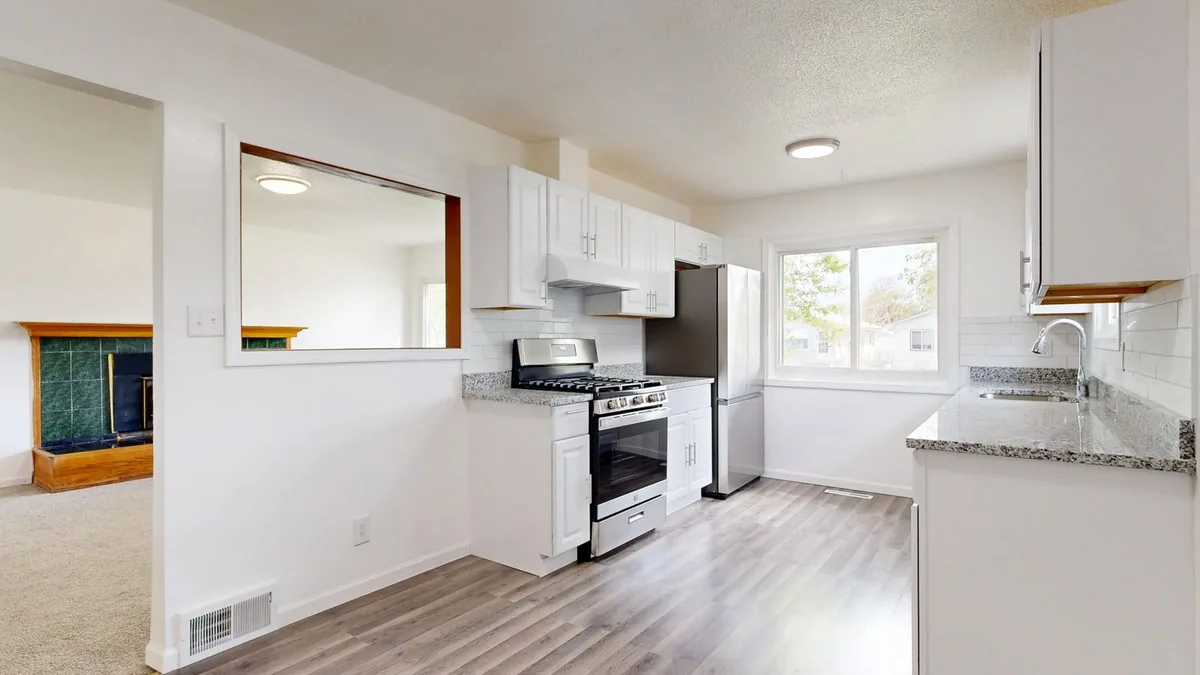
Painting existing kitchen cabinets can preserve a layout you like, while replacement can address a layout or storage problem that paint cannot change. The right comparison starts by identifying why you are dissatisfied. Worn finish, damaged boxes, awkward storage and an inconvenient work area are different problems with different possible solutions.
An Indianapolis remodeling discussion asked specifically about experiences repainting cabinets. Instead of promising that every painted kitchen will look new, this guide explains what to inspect, what to ask a refinisher and how to compare a finish project with refacing or replacement. A written condition assessment helps keep the decision tied to your cabinets.
Decide whether the layout works
Walk through a normal cooking and cleanup routine. Identify doors that collide, inaccessible shelves or missing storage. Ask whether modest hardware changes would help or whether the cabinet arrangement itself is the limitation. A new finish can change appearance, but it cannot automatically solve a poorly positioned appliance or an unsuitable cabinet footprint.
Ask for a condition assessment
Have the provider distinguish surface wear from loose, damaged or unsuitable components. Ask which areas can be repaired and what remains excluded. Document the existing condition before work begins. A finish estimate should not silently assume that every door, hinge and cabinet box is sound when visible problems suggest additional assessment is needed.
Identify the existing material and finish
Ask the refinisher how the cabinet construction and current coating affect the proposed method. Different materials may require different preparation or may limit acceptable results. Do not assume a process used on a friend's kitchen applies to yours. Request a clear explanation of compatibility rather than relying on the color sample alone.
Compare painting and refacing separately
Refacing can involve different work from coating existing surfaces. Ask exactly which doors, drawer fronts, exposed sides or trim would be retained or replaced. The label by itself is not enough to compare proposals. Keep the delivered components and preparation steps explicit so a lower price does not represent an entirely different project.
Request a representative finish sample
Agree on a sample that reflects the intended substrate, preparation and finish where practical. Review it in the kitchen's actual lighting. Discuss acceptable texture and visible grain before approving all surfaces. A smooth brochure image may not represent the appearance of the existing material once it is refinished.
Clarify where preparation occurs
Find out which pieces are removed and worked on elsewhere, and what happens inside the house. Ask about protection, ventilation, access restrictions and cleanup. For older painted materials, discuss appropriate lead-safe assessment and work practices with qualified providers. Do not sand unknown coatings simply to discover whether the cabinet is suitable for a quote.
Include hinges and drawer operation
A fresh surface can highlight hardware that already operates poorly. List repairs, replacements or adjustments separately, including whether new hardware is owner-supplied. Confirm whether hole changes and matching touchups are included. The project should explain how the cabinet will function after refinishing as well as how it will look.
Review interior surfaces and exclusions
Ask whether cabinet interiors, drawer interiors, shelves, undersides and toe-kicks are included. Different providers may reasonably offer different boundaries, but you need to compare them deliberately. A door-only price may be appropriate for one goal and inadequate for another. Keep a marked list or drawing of the surfaces being treated.
Plan for product handling and use
Ask when doors will be returned, when the kitchen can be accessed and when the finish may be used or cleaned normally under the product guidance. Do not assume dry to touch means ready for every household task. Obtain written care instructions and a contact for concerns during the return-to-use period.
Price the full replacement alternative
If considering replacement, include removal, disposal, installation, countertops and any affected plumbing, electrical or wall work. A cabinet supply price is not a completed kitchen estimate. Compare alternatives at a similar level of completion. Otherwise refinishing may appear cheaper or more expensive for reasons unrelated to the actual delivered outcome.
Set realistic warranty expectations
Read what the provider warrants, for how long and under what maintenance conditions. Ask how existing defects, water exposure or normal use are treated. A warranty is not proof that every old cabinet has become a new product. Keep the original assessment so later disagreements do not depend on different memories of preexisting damage.
Make the decision with a scope matrix
Create columns for retained components, changed components, appearance, function, disruption and full cost. Place painting, refacing and replacement in separate rows. Choose the option that solves the identified problem within the household's constraints. Directory contacts can start the search, but confirm that each business actually offers the specific refinishing or installation method you want.
Frequently asked questions
1. When is painting worth considering?
Consider it when the existing layout and components suit your needs and a qualified provider finds the surfaces appropriate for the proposed process. Ask about repairs and expected appearance first. Painting should be chosen for a defined cosmetic goal, not as an assumed cure for every cabinet problem.
2. Can painting fix damaged cabinet boxes?
A coating does not by itself establish structural repair. Ask the provider to identify damage and explain whether separate repair or replacement is needed. Get those boundaries in writing so a finish-only contract is not mistaken for a promise to resolve underlying component problems.
3. Will wood grain disappear completely?
Discuss the actual material and finish sample with the refinisher. Do not assume a brochure photograph predicts the result on your doors. Ask what surface appearance is achievable through the quoted preparation and whether additional work would be required for a different texture.
4. Is refacing the same as painting?
No; ask each provider to define the components retained, covered or replaced under its proposal. Different businesses may use service labels differently. Compare the physical work and supplied materials, rather than assuming two offers with similar names will deliver identical cabinets.
5. Should I replace hinges during the project?
Assess the existing operation and discuss compatibility with the desired result. Replacing or adjusting hardware may be useful, but it should be separately specified. Confirm who supplies it and whether hole changes, alignment and related touchups are included in the price you are comparing.
6. Are cabinet interiors normally included?
There is no scope assumption you should rely on without checking. Ask about interiors, shelves, undersides and trim explicitly. Mark the included surfaces in the agreement. A provider may offer a suitable limited project, but you should understand what will remain in its existing finish.
7. Can I stay in the kitchen during preparation?
Agree on access restrictions, work-area separation and protection before the project begins. The answer depends on the process and products. Follow the provider's and manufacturer's guidance rather than assuming familiar-looking cabinets mean the room remains available for normal food preparation throughout the work.
8. How do I compare a replacement price fairly?
Include the completed installation and any connected work, not just cabinet purchase. Removal, disposal, countertops, utility changes and wall restoration can matter. Compare full scopes with refinishing so you understand which differences come from product choices and which reflect missing labor or associated work.
9. Does refinishing increase home value by a fixed amount?
This guide makes no return-on-investment promise. Choose a project for the condition, function and appearance you need. If a sale is planned, seek relevant property advice without assuming a generic percentage applies to your house or that every buyer values the same finish.
10. What should I inspect before final payment?
Review the agreed surfaces, color, finish sample expectations and hardware operation with the provider. Record incomplete items and obtain care and warranty guidance. The appropriate payment process follows your agreement; the practical aim is a shared, written understanding of what has and has not been completed.
Sources and related reading
- Indianapolis cabinet repainting and remodeling discussion.
- EPA: renovation consumers.
- Find relevant directory contacts. Confirm the exact service with the business.
Prepared as consumer decision guidance, not a diagnosis, engineering plan, legal opinion or guarantee of project results. Public discussion supplies question context, not independent proof about vendors or every Indianapolis property.