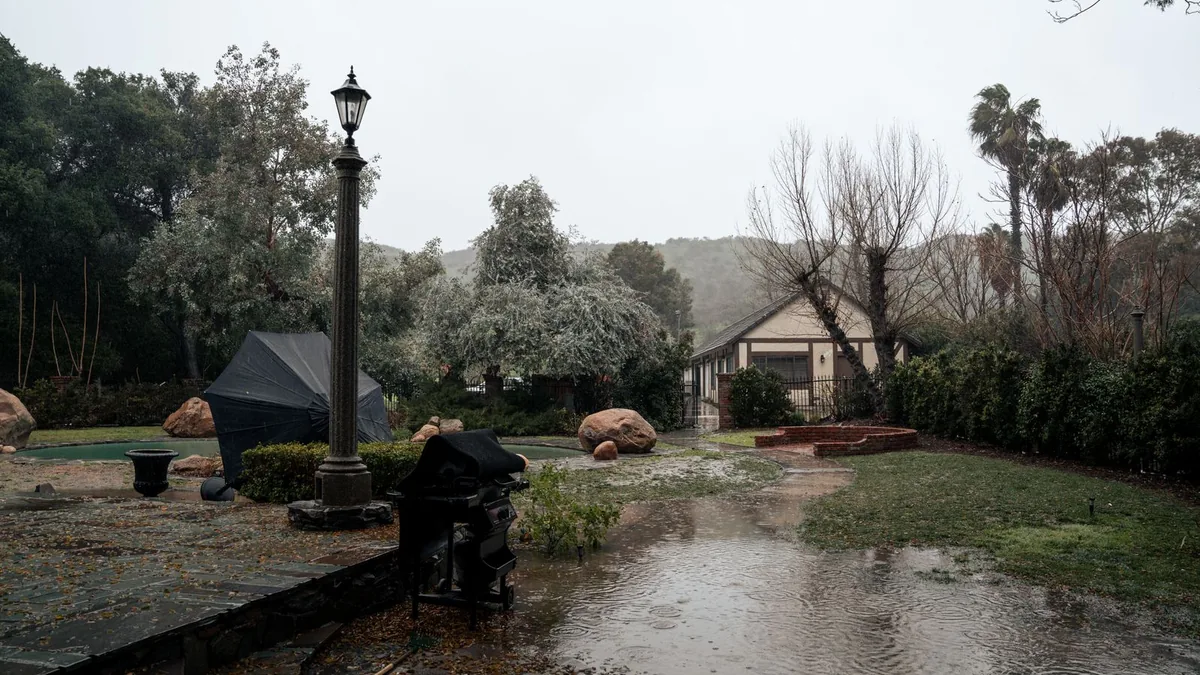
A new house can come with a yard that looks unfinished long after move-in: exposed ground, scattered stones, uneven growth and unclear maintenance responsibilities. Before paying to start again, separate the condition of the ground from the grass-establishment method and any work still planned. New sod or more seed does not answer every question about the site beneath it.
A June 2026 discussion from an Indianapolis-area new homeowner described struggling backyard establishment and debris. It is one household's account, not evidence that all builders deliver the same condition. Use it as a prompt to document your own property and request a specific assessment.
Document the starting condition
Take safe, dated photographs of bare areas, debris, low spots and existing vegetation. Keep the builder's landscape description and any maintenance instructions. Record what is observed rather than immediately assigning a cause. A clear starting record helps a landscaper distinguish establishment issues from work that may be outside the original planting scope.
Review the original landscape agreement
Find out what was promised regarding grading, topsoil, seed, sod and follow-up. Ask the builder to explain the actual documents if wording is unclear. This article does not interpret warranty rights. Keep any builder discussion separate from a new contractor's estimate so you do not accidentally purchase work before understanding the existing responsibilities.
Identify construction activity still planned
Tell the assessor about a future fence, patio, drainage work or equipment access. Establishing a lawn immediately before another contractor drives through it can create unnecessary rework. Ask for a sequence that coordinates the yard project with remaining construction rather than treating grass installation as an isolated purchase.
Assess grading and water routes
Ask whether visible unevenness or wet areas require a drainage assessment before surface work. Do not assume spreading material over a low area is automatically appropriate. The plan should respect the property's boundaries and discharge constraints. A grass installer may need another specialist's input when the underlying question involves broader site drainage.
Separate debris removal from soil work
Ask what stones, scraps or other materials will be removed and what conditions remain outside the scope. Do not disturb suspect construction waste without appropriate guidance. A landscape proposal should state how the surface will be prepared rather than relying on the word cleanup to cover every possible object or concealed condition.
Use testing for the right question
Purdue Extension provides local information about soil testing and suitable laboratories. Ask which assessment informs the proposed planting plan and what it does not measure. A routine nutrient result is not proof that all physical construction issues have been resolved. Link each test to a decision instead of ordering unrelated services.
Compare seed and sod as complete systems
Ask about preparation, product selection, installation and aftercare for each option. A product-only price is not the finished project. Discuss the household's desired use and willingness to maintain the area during establishment. Neither option should be presented as permission to ignore drainage, unsuitable preparation or continuing construction traffic.
Choose grass for actual light and use
Map shaded areas, sunny areas and expected foot or pet traffic with the provider. Ask why the proposed product suits those conditions. A uniform appearance goal may conflict with very different site conditions. Discuss whether some areas would be better used for planting beds or another appropriate landscape treatment rather than repeated grass replacement.
Clarify watering access and responsibility
Check whether the household can carry out the recommended aftercare before booking installation. Ask for written guidance and explain travel or access limitations. If irrigation work is proposed, define it separately. Do not assume a crew that lays sod will also provide continuing watering unless that is explicitly part of the service.
Request a disturbance and access plan
Identify gates, fences, driveways and neighboring features that equipment could affect. Ask what surface protection and restoration are included. A narrow access route may change the practical method or cost. Share the actual conditions with bidders rather than comparing an unrestricted machine-access proposal with a hand-access job as if they were identical.
Set inspection and follow-up expectations
Ask when the provider recommends reviewing establishment and how concerns should be reported. Specify any included follow-up visits and their limits. Do not accept a vague guarantee of a perfect lawn regardless of use or weather. A useful agreement explains maintenance obligations and how the contractor distinguishes a service issue from a new disturbance.
Preserve the installation record
Keep the preparation scope, product details, invoices, photographs and care instructions. Note future construction dates and changes in use. If a problem recurs, this record gives the next professional a starting point. A yard can change for multiple reasons, so documentation is more helpful than assuming every later bare patch has the same original cause.
Frequently asked questions
1. Should I remove everything and start again?
Ask for an assessment before choosing complete replacement. Some areas may need different work from others. Document the existing condition, planned construction and desired use. A full restart can be an option, but it should follow a reasoned scope rather than frustration with the first season's appearance.
2. Will adding topsoil automatically fix the lawn?
No general promise is appropriate without understanding the site. Ask what problem the material addresses and how grading, drainage and existing conditions are handled. A surface layer should not be sold as proof that every underlying construction or water-management question has been resolved.
3. Should I speak with the builder first?
Review the landscape documents and ask the builder to explain the original scope and follow-up process. Keep records of that discussion. This guide does not determine warranty coverage or legal responsibility, but understanding existing commitments can help you avoid confusing corrective work with a separate optional improvement.
4. Is sod always better than seed?
Compare the complete installation and aftercare for your conditions and goals. Product choice alone does not settle preparation, watering or future traffic. Ask the provider why each option would fit your property and what maintenance the household must be able to provide after installation.
5. Can a soil test diagnose construction debris?
Ask what the test measures and what a separate site assessment needs to address. Routine nutrient information should not be assumed to reveal every physical or concealed condition. Choose investigations that answer the actual question rather than treating a laboratory report as a universal clearance for planting.
6. Should I install the fence before the lawn?
Discuss the sequence with both contractors. Equipment access and ground disturbance can affect newly established areas. There is no single order for every property, but the plan should deliberately account for remaining work instead of leaving two crews to make conflicting assumptions about access.
7. What if my yard has both shade and full sun?
Ask whether the proposed grass or landscape treatment suits each area separately. One product may not meet every goal across the property. The provider should explain tradeoffs and alternatives rather than promising a uniform result without considering the conditions in the difficult sections.
8. Who waters after installation?
Confirm that responsibility before booking. Ask for written aftercare appropriate to the chosen system and explain any practical limitations. Installation and ongoing maintenance are different services. Do not assume the contractor returns to water simply because establishment depends on appropriate care afterward.
9. How should I compare quotes?
Compare preparation, debris scope, grading, products, installation, access and follow-up on the same basis. Identify exclusions and owner responsibilities. A lower price may represent a narrower project, while a higher price may include work you do not need. Ask for explanations rather than judging by the total alone.
10. What if the same bare area returns?
Use the installation and maintenance record to describe the recurrence to the provider. Ask whether conditions, use or a remaining site issue need further assessment. Avoid assuming that buying another load of the same product will solve a limitation that was not understood the first time.
Sources and related reading
- Indianapolis-area new-home backyard discussion.
- Purdue Extension: Marion County soil testing.
- Find relevant directory contacts. Confirm the exact service with the business.
Prepared as consumer decision guidance, not a diagnosis, engineering plan, legal opinion or guarantee of project results. Public discussion supplies question context, not independent proof about vendors or every Indianapolis property.