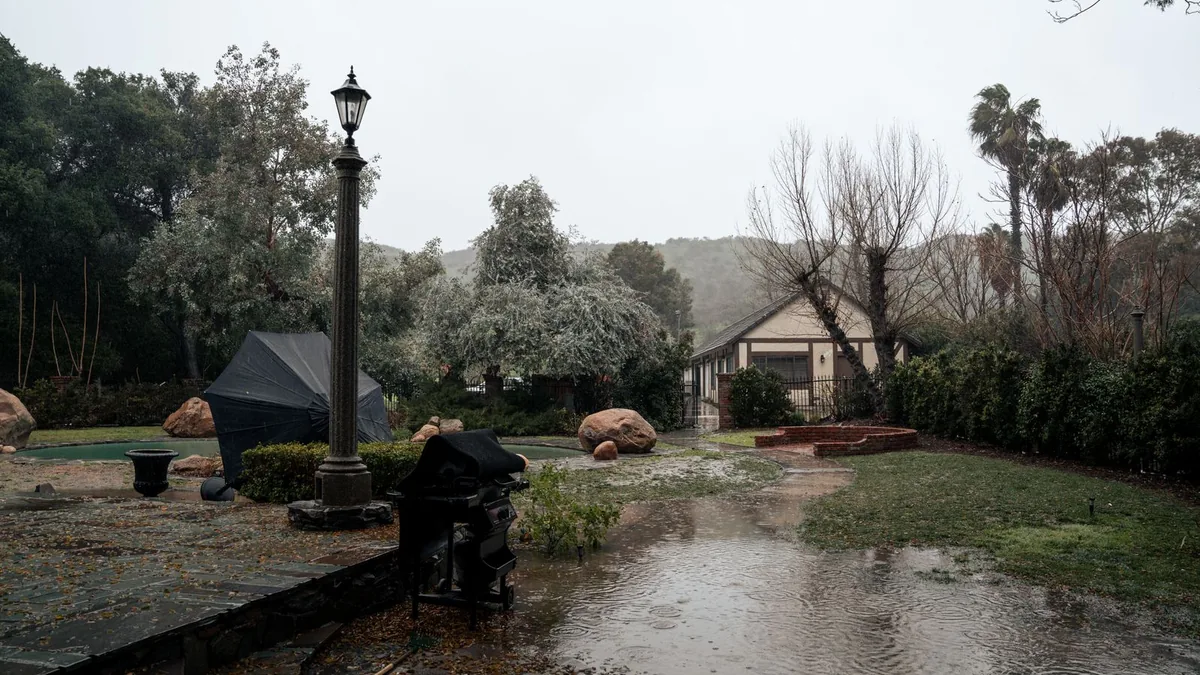
A flooded patch of lawn is a symptom, not a complete drainage design. Before buying a French drain, filling a low spot or ordering new sod, find out where the water arrives, where it can appropriately go and what property constraints affect the route. A useful assessment connects those observations to the proposed work.
An August 2026 Indianapolis discussion asked for help after rainfall exposed a more serious yard-drainage problem than expected. The responses illustrate the need for clear assessment and follow-up, not proof that one method suits every yard. Use your own property's observations to brief the professional.
Map where water first appears
From a safe position, note the initial wet area and how it changes after rain. Existing photographs can help show the sequence. Distinguish water entering from a neighboring area, roof runoff and a low area filling locally. Do not enter moving water or excavate a test trench simply to improve your notes.
Record how long the area stays wet
Write down the approximate time between rainfall and disappearance of visible standing water. Include whether the area remains soft afterward. This history helps an assessor distinguish observations from a single dry-day impression. Avoid claiming a precise soil or groundwater diagnosis from the duration alone; ask what further assessment is needed.
Review roof runoff connections
Show the assessor existing gutters, downspouts and any known buried routes. Ask which connections will be inspected and whether their condition affects the proposal. Moving water from one visible spot to another is not automatically a satisfactory solution. The plan should explain the intended destination rather than stopping at the edge of the drawing.
Ask who is qualified for the design question
A routine landscape crew may offer installation without providing the broader assessment your property needs. Ask about experience with comparable drainage constraints and whether surveying, design or another specialist is needed. Choose the service for the question being answered, not simply because the business also mows lawns or installs mulch.
Identify boundaries and shared features
Locate property lines, fences, easements and any shared drainage features using appropriate records and advice. Tell the assessor about neighboring structures and known disputes without asking them to accept unverified blame. This guide does not interpret drainage rights. Seek appropriate professional or authority guidance before a proposal depends on crossing or affecting another property.
Compare grading with collection systems
Ask why the proposal uses grading, a drain or a combination for the observed conditions. Request a plain-language explanation of what each component accomplishes. A system name is not enough. Understand the route, outlet, maintenance and limits so two quotations can be compared as solutions rather than just lengths of buried pipe.
Check the proposed discharge destination
Ask who confirms that the intended destination and connection are appropriate and permitted where required. Do not assume an available pipe or nearby ditch can be used. Get the route and responsibility documented before work begins. An attractive yard surface is not evidence that the hidden discharge arrangement has been properly resolved.
Protect utilities and existing landscape
Tell the contractor about irrigation, lighting, private lines and recent work as well as visible utility features. Ask how locating and protection are handled before excavation. Keep trees and root areas in the planning discussion. A drainage quote that ignores access damage and restoration can leave substantial work outside the apparent project total.
Distinguish soil testing from drainage design
Purdue Extension provides local soil-testing information for questions about soil condition and plant needs. Ask the assessor what tests actually address your problem. A routine nutrient test should not be assumed to produce a complete grading or drainage plan. Choose the investigation that answers the relevant site question rather than collecting unrelated results.
Include surface restoration in the estimate
Ask about removal and replacement of sod, seed, mulch, paving or other disturbed features. Define settlement follow-up and maintenance responsibilities if offered. Installation machinery can affect areas beyond the drain itself. Compare the finished condition promised by each bidder instead of discovering after excavation that lawn repair was never included.
Agree on performance observations and limitations
Ask what result the contractor expects under the conditions assessed and how the installation will be checked. Avoid accepting an absolute promise that no water can ever appear again. Define how concerns are reported and what warranty actually covers. A clear limitation is useful information, especially where unusual storms or off-site conditions remain outside the project.
Keep a plan and maintenance record
Request the installed route, accessible features, outlet information and care instructions. Take photographs provided by the contractor before concealment where available. Maintain a simple record of observations after rainfall. If the symptom changes later, those details help another professional evaluate the system without relying entirely on where the homeowner remembers the trench being dug.
Frequently asked questions
1. Should I automatically install a French drain?
No. Ask what assessment connects that method to your observed water problem and appropriate outlet. Different routes and site constraints can require different approaches. A product name or a neighbor's successful project does not establish what your yard needs or where collected water may go.
2. Is standing water always caused by clay soil?
Do not diagnose the cause from one observation or a regional generalization. Water routes, grading, existing systems and site conditions all deserve assessment. Explain what you see and ask which findings support the proposed work rather than assuming every Indianapolis yard has the same soil problem.
3. Can I send water to the street or a ditch?
Confirm the actual destination and applicable requirements with the appropriate professionals or authority. This guide does not authorize a connection. A nearby route may look convenient while raising property, utility or maintenance questions that need resolution before excavation or installation begins.
4. Who should I contact first?
Look for a provider who can explain the drainage assessment needed, not only sell an installation. Depending on the property, additional design or surveying advice may be appropriate. Ask about comparable projects and what written findings you receive before deciding which construction service to purchase.
5. Does a soil test explain every wet yard?
No. Ask what a particular test measures and whether it answers the drainage question. Routine plant-nutrient information can be useful for landscaping but is not automatically a complete assessment of water routes, elevations or discharge. Match the investigation to the decision you need to make.
6. Should the contractor visit after rainfall?
Discuss what observations would help and what can be assessed safely. Existing photographs and timing notes may supplement a site visit. Do not enter unsafe conditions for documentation. Ask the provider to explain any limits of a dry-day visit rather than assuming a quick visual impression is conclusive.
7. What if the water appears to come from next door?
Document observations without assigning blame and show the assessor available boundary and drainage information. Seek appropriate advice before work affects another property. An online article cannot interpret drainage rights or settle a dispute from photographs; the immediate goal is understanding the actual route and constraints.
8. Is lawn restoration normally included?
Check the written proposal. Ask about disturbed soil, seed or sod, irrigation repairs and follow-up responsibilities. Different contractors can reasonably offer different scopes. You should compare the finished result promised by each rather than assuming a drain-installation price includes every landscape repair afterward.
9. Can a contractor guarantee a permanently dry yard?
Be cautious about absolute promises. Ask what conditions were assessed, what result is expected and what remains outside the work. Read the warranty scope and reporting process. No directory guide can establish performance for an uninspected property or every possible future rainfall event.
10. What should I keep after installation?
Save the plan, outlet details, invoices, approved changes, photographs and maintenance guidance. Record observations during later rainfall if problems recur. These records help a professional distinguish maintenance, a changed condition or an installation concern without guessing how the buried system was arranged.
Sources and related reading
- Indianapolis yard drainage discussion.
- Purdue Extension Marion County soil testing information.
- Find relevant directory contacts. Confirm the exact service with the business.
Prepared as consumer decision guidance, not a diagnosis, engineering plan, legal opinion or guarantee of project results. Public discussion supplies question context, not independent proof about vendors or every Indianapolis property.