A thin lawn does not always need another version of the same treatment. Before paying to reseed a recurring bare patch, ask what is limiting the area and whether the desired use matches those conditions. Sometimes a lawn-improvement plan is appropriate; sometimes changing the layout or maintenance expectations deserves discussion.
Indianapolis and central Indiana lawn discussions include questions about thickening turf, establishment and recurring weak areas. Those accounts help identify homeowner decisions but do not diagnose your property. This guide organizes an assessment and comparison process so a proposed service addresses the observed limitation instead of merely promising a greener photograph.
Map the recurring weak areas
Mark where grass thins repeatedly and where it performs acceptably. Record whether the pattern changes with seasons or use. A map can reveal that the problem is localized rather than a reason to renovate the entire property. Ask the provider to explain why it proposes one treatment everywhere if the conditions visibly differ.
Observe light across the day
Describe shaded structures and trees without trying to estimate a complete planting specification yourself. Ask the landscaper how actual light conditions affect the proposed choice. A photograph taken once may not represent the daily pattern. Avoid promising that a product labeled for shade will perform acceptably in every low-light location.
Describe foot and pet traffic
Show the routes people and pets actually use. A shortcut between the driveway and door may remain difficult to maintain as turf even after reseeding. Ask whether the layout should acknowledge the route. A stepping area or another suitable design may deserve comparison with continuing to repair damage from a pattern nobody intends to change.
Check water and ground conditions
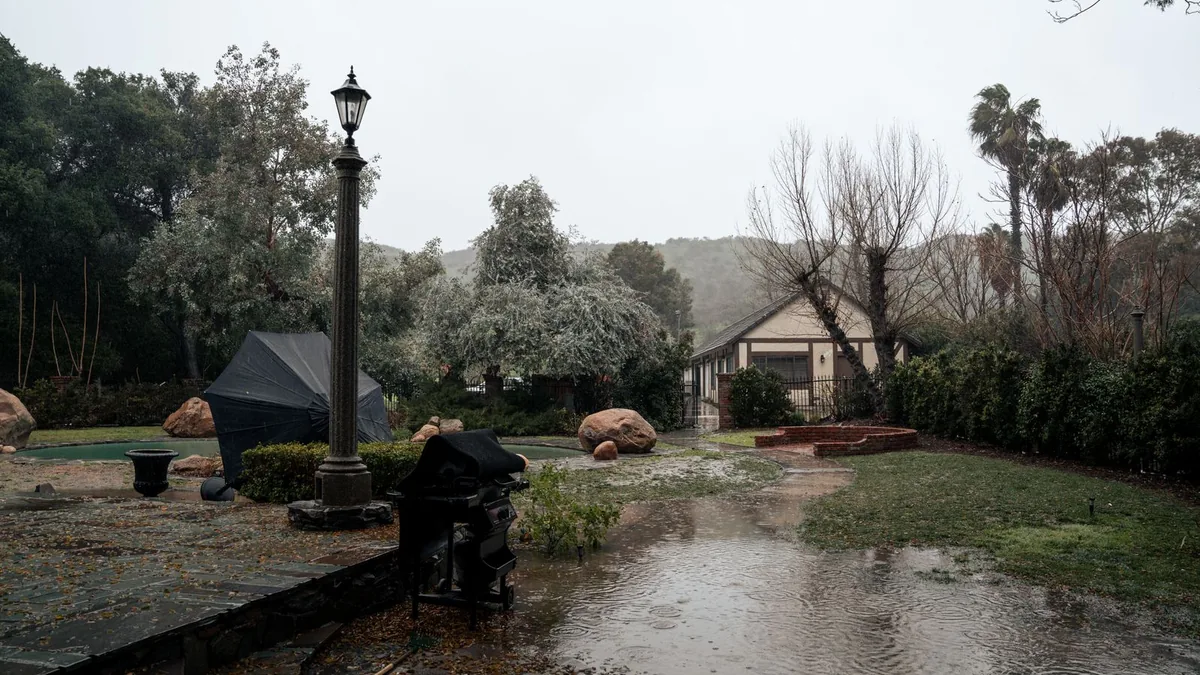
Mention standing water, runoff, very dry areas or recent construction disturbance. Ask whether those observations require separate assessment before selecting plants. Do not assume the visible thinness identifies a nutrient deficiency. The provider should connect the proposed work to the actual conditions rather than treating every brown or bare patch as the same problem.
Use soil information deliberately
Purdue Extension's local soil-testing guidance can help you ask what information a test provides. Request interpretation relevant to the intended planting and site. Do not apply products simply because they were recommended for a different yard. Testing is useful when it informs a decision, not when the report is collected and then ignored in favor of a standard package.
Compare lawn improvement and renovation
Ask the provider to explain the difference between improving existing turf and replacing or substantially rebuilding the area. Request the preparation and aftercare for each option. A complete restart may be unnecessary, while repeated minor treatment may leave the real limitation untouched. Compare the reasoning and scope rather than assuming the most extensive service is automatically best.
Consider an appropriate planting bed
If the area does not suit the desired lawn, discuss other landscape uses. Ask about plant suitability, mature size, maintenance and access rather than choosing by a nursery photograph alone. A bed is not automatically low maintenance or appropriate for every wet or shaded spot. Define the household's actual care capacity before approving a design.
Account for nearby trees
Ask whether planned grading, excavation or planting could affect existing trees. Involve an arborist when the relevant question exceeds the landscaper's assessment. Do not cut roots or change soil levels based on a general online lawn suggestion. Preserving a valued tree and improving the surrounding surface should be coordinated rather than treated as unrelated projects.
Set a realistic maintenance budget
List the work the household can perform and what it expects to outsource. Include watering access, seasonal care and recurring visits. A design that requires attention nobody can provide may not solve the original frustration. Compare ongoing responsibilities as well as installation cost, without accepting unsupported promises that any living landscape will require no care.
Plan installation around use
Tell the provider when the area must remain accessible and whether children or pets need another route during establishment. Ask for an installation and aftercare sequence that fits those needs. A newly treated surface can be disrupted if household use resumes before the agreed point. Solve that practical issue before selecting a service date.
Compare proposals by the intended result
Ask each bidder to state the problem it believes it is addressing, the proposed method and expected limitations. Compare preparation, products, follow-up and maintenance instructions. One may propose a lawn while another proposes a mixed landscape; those are different outcomes, not merely different prices for an identical service.
Keep records for a useful reassessment
Save site observations, product details, installation records and care guidance. Take photographs at comparable points when discussing progress. If the area remains weak, ask what new information changes the recommendation. Avoid repeating a treatment indefinitely without reviewing whether the original explanation still fits the conditions and the household's use of the space.
Frequently asked questions
1. Does a bare patch always need more seed?
No single treatment follows from appearance alone. Ask what limits that area and whether the proposed seed can meet the conditions and use. Repeated seeding may be reasonable in some cases, but it should not replace assessment when the same section fails to establish repeatedly.
2. Can shade-tolerant grass grow anywhere?
Do not interpret a product label as a universal guarantee. Ask the provider to evaluate actual light and other site conditions. A different landscape use may deserve consideration if the space cannot support the household's turf expectations, regardless of how attractive the seed packaging looks.
3. Should I remove a tree to improve the lawn?
Do not make that decision from lawn appearance alone. Discuss the valued tree, surrounding conditions and alternatives with appropriate professionals. An arborist can help assess tree-related questions. This guide does not recommend removing a tree or cutting roots to solve an unassessed turf problem.
4. Is a planting bed maintenance free?
No living landscape should be assumed to need no care. Ask about watering, seasonal work, plant replacement and access. Compare responsibilities with the lawn option. A different design can be a better fit, but only if its expected upkeep matches what the household can actually provide.
5. Will fertilizer fix every thin area?
Do not assume a nutrient issue without assessment. Ask what evidence supports the recommendation and how any soil results inform it. Water, light, use and other site conditions may need separate consideration. Applying the same product repeatedly is not proof that the cause has been understood.
6. Can pets keep using the area after treatment?
Ask for instructions specific to the work, products and establishment plan. Arrange an alternative route or area where needed. Do not rely on a generic online waiting period. The provider should explain safe access and care requirements before the household agrees to the proposed service.
7. How much of the yard should be renovated?
Ask why the proposed boundary matches the observed problem. Localized treatment and broader renovation are different scopes. A mapped assessment helps compare them. Avoid assuming the entire lawn must be replaced simply because one recurring patch looks poor or one package is marketed for the whole property.
8. What should a soil test help decide?
Ask which measurements are relevant to the intended planting and how results will change the recommendation. Routine soil information is not a complete diagnosis of every physical or drainage problem. A test is most useful when the provider explains the decisions it supports and its limitations.
9. How can I compare very different designs?
Start with household goals: access, appearance, use, maintenance and ongoing cost. Then compare how each design serves them. A lawn and a planting bed should not be judged as identical products. Request clear expectations so you can choose an outcome rather than only a lower opening price.
10. What if another seeding attempt disappoints?
Bring the records and observations back to the provider and ask for reassessment of the limiting conditions. A recurrence does not automatically prove poor workmanship or bad seed. It does justify asking whether the original plan addressed the right problem before paying to repeat it again.
Sources and related reading
- Indianapolis discussion about thickening a lawn.
- Purdue Extension: lawn improvement approaches.
- Purdue Extension Marion County: soil testing.
- Find relevant directory contacts. Confirm the exact service with the business.
Prepared as consumer decision guidance, not a diagnosis, engineering plan, legal opinion or guarantee of project results. Public discussion supplies question context, not independent proof about vendors or every Indianapolis property.