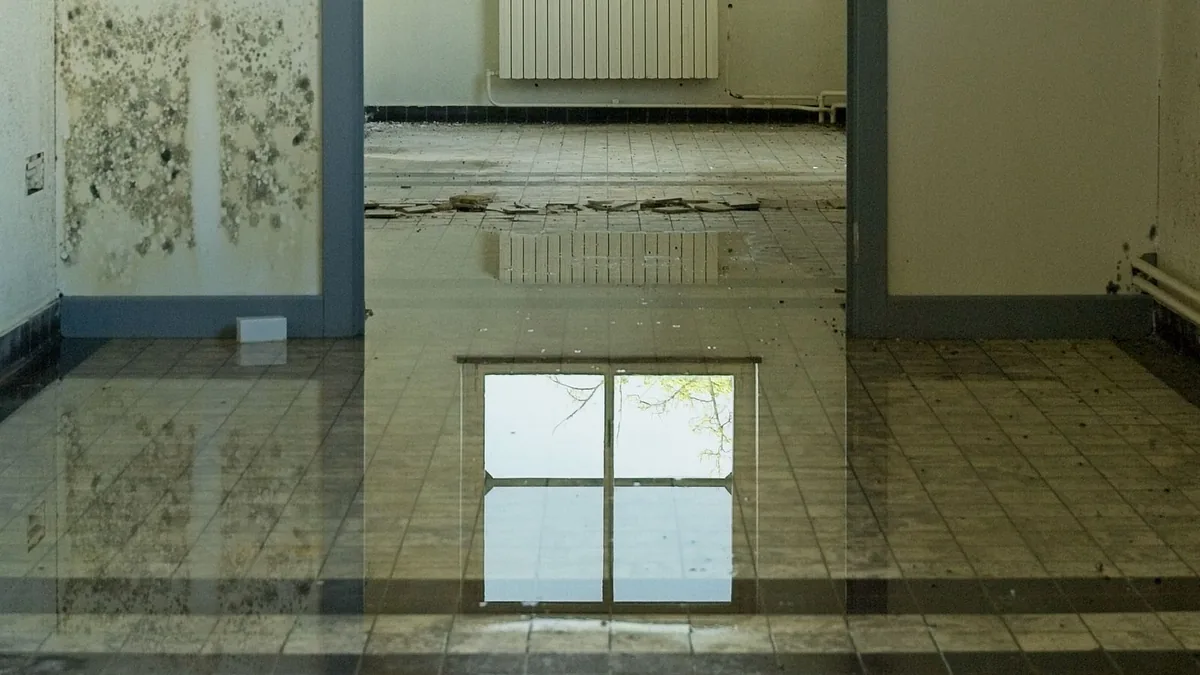
A wet basement can lead to several competing proposals: dry the room, seal a crack, change drainage or install equipment. Those proposals do not necessarily answer the same question. An Indianapolis discussion described water appearing after storms near a previously observed foundation crack. That sequence is useful information, but a visible crack is not by itself a complete diagnosis. Start with safe access and a documented assessment of where the water appears and what the proposed work is intended to change.
Address immediate hazards before inspection
Keep away from standing water near electrical equipment and do not enter an area that may be structurally unsafe. Seek emergency assistance for an immediate threat. Ask the responding provider how safe access will be established before assessment or cleanup. A photograph or estimate can wait when obtaining it would require entering water or an unstable area.
Record the pattern of water appearance
From a safe location, note when water appeared, where it was first visible and whether weather or plumbing use coincided with it. Record a specific wall or floor area rather than saying the entire basement leaked. A timeline helps a professional frame the inspection without turning your initial suspicion into a fact that every later proposal simply repeats.
Distinguish visible damage from the water route
Stained finishes can show where water accumulated without proving its entry point. Ask the assessor to explain what evidence links a proposed repair to the route. If finishes conceal important areas, request the limits of the current conclusion. Additional access should have a defined purpose, permission and restoration plan rather than becoming an unexplained demolition step.
Explain exterior access constraints
Tell the provider about narrow side yards, neighboring structures, landscaping and other barriers. Ask whether the assessment includes relevant accessible exterior areas. A practical recommendation needs to account for where workers and equipment can operate. Do not assume an exterior method is feasible because a general diagram shows it; the actual property arrangement and permissions need consideration.
Ask about drainage observations
Request an explanation of any relevant grading, downspout or drainage observations and how they relate to the recorded event. A visible exterior issue can justify attention without establishing it is the only source. The assessor should distinguish a measured or observed condition from a hypothesis that needs further investigation before a large project is specified.
Keep crack treatment and structural assessment distinct
Ask what a proposed crack treatment is designed to accomplish and what it does not establish about the wall. If movement, unusual displacement or another structural concern is identified, ask who should evaluate it. Waterproofing sales language is not a substitute for an appropriate structural assessment when the actual observations raise that separate question.
Compare interior and exterior proposals by purpose
Ask each provider to explain the problem its method addresses, the evidence supporting it and remaining limitations. Two methods may manage water differently rather than offering interchangeable versions of the same repair. Compare access, maintenance, disruption and finished-area restoration. A lower price is hard to interpret until the boundaries of each proposal are clear.
Separate drying from permanent repair
A restoration company may dry affected materials while another contractor investigates the source. Ask who coordinates those tasks and which work is temporary mitigation. Drying the room does not automatically prevent another event, while source repair does not automatically clean or dry damaged materials. Keep both needs visible so neither disappears between separate estimates.
Request evidence for material removal
Ask which finishes or contents appear affected and how that was assessed. A proposal should define removal boundaries and any further assessment needed. Do not assume a dry-looking surface proves concealed material is ready to close, or that every finish in the basement must be discarded. The decision should relate to the actual condition and cleanup requirements.
Clarify insurance communication without assuming coverage
Contact your insurer about the event and the documentation it requires. Keep repair, mitigation and reconstruction charges distinct. A contractor can describe observed work without determining policy coverage. Do not delay an urgent safety response solely to obtain a perfect photograph, and do not assume that a familiar type of basement leak is covered by every policy.
Read performance and maintenance terms
Ask what the repair provider promises, what conditions remain excluded and what maintenance you must perform. A transferable warranty, if offered, should be read rather than inferred from an advertisement. Find out who responds if water appears again and what record will be useful. A practical reporting process matters alongside the stated warranty duration.
Define completion before rebuilding finishes
Ask what findings or measurements support the conclusion that affected areas are ready for the next stage. Keep source-repair records and restoration documentation together. Confirm whether any follow-up observation is recommended. Replacing finished walls and flooring should follow an understandable completion decision, not merely a calendar date chosen before the actual condition was assessed.
Frequently asked questions
1. Does a visible crack prove the leak source?
No. It is an observation worth assessing, especially if water appeared nearby. Ask what evidence connects it to the entry route and whether other conditions were inspected. Avoid choosing a permanent remedy solely from the first visible mark.
2. Should I enter the basement to photograph water?
Do not enter standing water near electrical hazards or an unsafe structure for documentation. Describe what you can observe safely and obtain appropriate help. Safety and access assessment take precedence over creating a complete photographic record.
3. Can drying alone prevent another leak?
Drying addresses affected materials after an event. It does not automatically correct the water-entry route. Ask who investigates the source and what the separate repair is intended to change, while keeping cleanup and reconstruction needs distinct.
4. Is exterior waterproofing always the best option?
No universal method fits every property. Ask how the proposal relates to observed conditions, access and maintenance. Compare the purpose and limitations of different methods rather than assuming two quotes describe interchangeable work.
5. Does crack repair certify the foundation?
Not automatically. Ask what the service establishes and what lies outside its scope. If structural concerns are observed, request an appropriate assessment rather than treating a waterproofing treatment as proof of overall wall condition.
6. Do all wet finishes need removal?
The decision requires an assessment of material condition, contamination and drying potential. Ask for documented boundaries and reasoning. A broad assumption based only on appearance is not a substitute for a site-specific restoration plan.
7. Will home insurance pay for the work?
Coverage depends on the actual policy and event. Contact the insurer and keep factual records. Separate source repair, mitigation and reconstruction estimates so the discussion is understandable without assuming a contractor can guarantee reimbursement.
8. What if exterior access crosses a neighbor’s property?
Tell the contractor early and confirm permissions and logistics before work is priced or scheduled. This article does not determine property rights. An estimate should not assume access that has not been authorized or checked.
9. When can I replace flooring?
Ask the responsible professionals what evidence supports readiness and what source work remains. Rebuilding on a predetermined date without considering actual conditions can leave important uncertainty hidden beneath new finishes and make later assessment more difficult.
10. What should I retain after repairs?
Save the diagnosis, inspected areas, limitations, photographs, completed scope, maintenance instructions and warranty. If water returns, record the date and location. These details help distinguish recurrence at the repaired area from a different route.
Sources and related reading
- Local basement-water discussion.
- EPA flood-cleanup safety and professional help.
- Competitor remediation coverage.
- Find category contacts and confirm the exact service directly.