A flat tire creates two decisions: how to keep people safe and how to move the vehicle appropriately. Those decisions are connected, but the cheapest tire service is not the priority when the vehicle is exposed to traffic. Once you have contacted appropriate assistance for the situation, clarify whether a usable spare, an onsite service or transport to a tire professional is the practical next step.
An Indianapolis discussion asks for both tire-shop and towing recommendations after a tire failure. It illustrates the need to coordinate roadside help with the eventual repair, not a reliable price list or an assessment of your tire.
Describe the location before the tire
Tell the dispatcher the road, direction of travel and nearest reliable landmark or exit information. Explain whether the vehicle is obstructing traffic or in another dangerous position. Do not enter traffic to obtain a photograph or inspect damage. If there is immediate danger, contact emergency services and follow their instructions instead of treating the situation as an ordinary repair appointment.
Avoid assuming one waiting position fits every scene
The safest place to wait depends on the surroundings and circumstances. Ask responding authorities or the assistance provider for guidance and avoid moving between the vehicle and traffic unnecessarily. This guide cannot assess a particular roadside remotely. Keep passengers informed, and tell the dispatcher about children, mobility needs or other circumstances that affect the response plan.
Identify the actual vehicle
Give the make, model and any relevant configuration. Tell the provider if the vehicle is unusually heavy, modified, low to the ground or carrying equipment. The response should fit the vehicle rather than merely the symptom “flat tire.” Clear details help the dispatcher decide what equipment and expertise to send instead of discovering a mismatch after arrival.
Check spare information without creating another hazard
If you already know whether a spare and required equipment are present, tell the provider. Do not unload belongings or search beneath the vehicle in an exposed location just to answer the question. A car purchased used may not contain the equipment you expect. When the vehicle is safely accessible, confirm the actual arrangement rather than relying on an assumption.
Distinguish a usable spare from any spare
The provider needs to know whether a spare is suitable and usable, not simply whether something resembling one is in the car. Follow vehicle instructions and professional assessment. Temporary equipment can have use limitations, and this article does not prescribe a speed or distance for your particular vehicle. Ask what onward travel is appropriate after any temporary roadside solution.
Ask what the roadside visit can accomplish
Clarify whether the service changes a wheel, assesses the situation or offers a different onsite solution. Do not assume every roadside provider repairs tires at the scene. Ask what happens if the spare is missing, unsuitable or inaccessible. The answer should include the next step and any changed charges rather than leaving you to start another search after the first visit ends.
Leave repairability to a tire professional
Visible damage and pressure loss need an appropriate assessment. Do not assume that reinflation makes a tire safe or that every puncture can be repaired. Ask the tire professional to explain why repair or replacement is recommended. The roadside task and the final tire decision may be separate services performed by different businesses with different equipment.
Confirm the destination before authorizing a tow
Call the receiving shop when possible to confirm it can accept the vehicle and handle the needed assessment. Ask about opening hours, after-hours arrangements and appointment availability. A tow to a closed or unsuitable destination can create another transport problem. Confirm the full address with both dispatcher and receiving business rather than relying on a familiar company name alone.
Compare the complete service charge
Ask what attendance, wheel changing, transport and any additional distance mean under the quote or assistance plan. State the pickup and destination clearly. Do not assume a membership or insurance arrangement covers every item. If the service changes after inspection, request an explanation of the revised scope before approving additional work when circumstances allow.
Tell the dispatcher about passengers
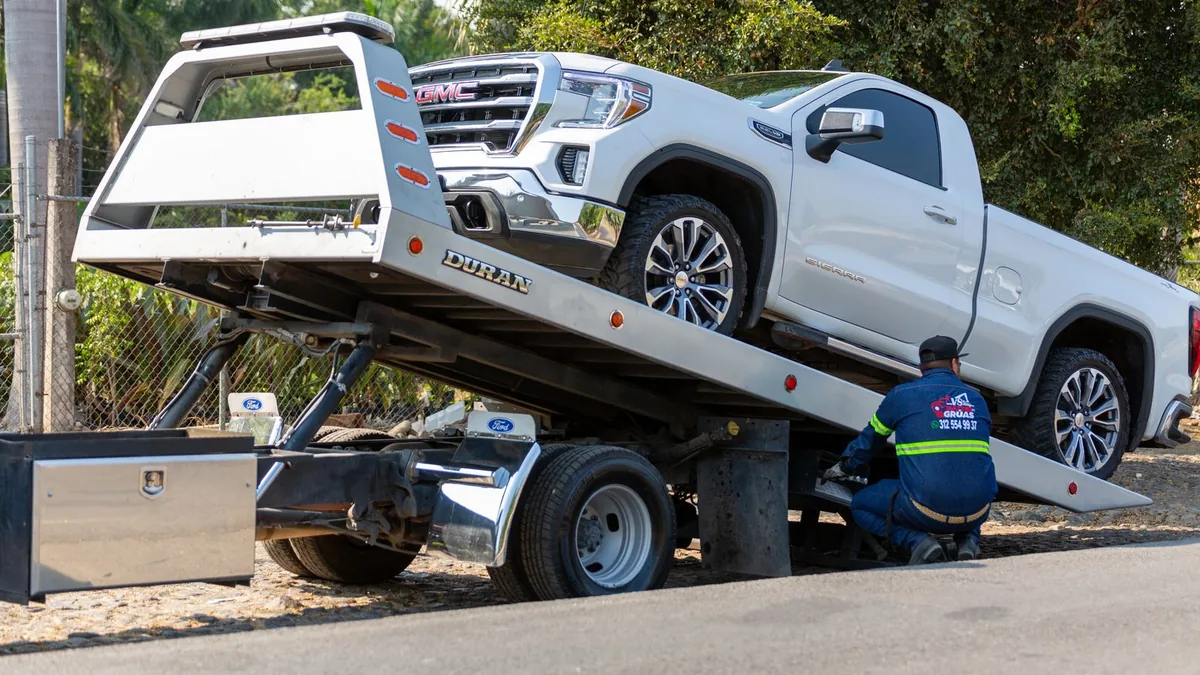
Ask whether anyone can travel with the service vehicle and make a separate passenger plan if needed. Do not assume the truck has seats for the whole household or can accommodate a child restraint. Mention pets and accessibility requirements early. Transporting the car and getting its occupants to a safe destination are related tasks that require explicit coordination.
Keep the tire assessment and transport records
Save the roadside receipt, destination details and later tire findings. If you want to ask an insurer or another organization about reimbursement, request its actual process rather than relying on forum anecdotes. A payment receipt does not establish coverage by itself. Documentation also helps if the receiving shop needs to understand how far the vehicle traveled after the failure.
Plan after the immediate incident
Once the vehicle is safely assessed, review spare availability, the owner's instructions and assistance contact details for future use. Browse towing and roadside providers for contacts, but verify present availability and the exact service directly. A directory listing cannot guarantee dispatch time, suitability or membership acceptance for your location and vehicle.
Frequently asked questions
1. Should I change the tire myself on a busy road?
Do not assume the scene is suitable. Prioritize safety and contact appropriate assistance. A website cannot assess traffic exposure, ground conditions or your equipment well enough to direct a roadside wheel change.
2. Does every car have a spare?
No assumption should be made, especially with a used vehicle. Confirm the actual equipment when safely accessible and tell the dispatcher what you know rather than promising a usable spare without checking.
3. Will roadside assistance repair the tire?
Ask about the service offered. Some responses involve fitting a usable spare or transporting the vehicle rather than repairing the tire itself. Clarify what happens if the initial option is unavailable.
4. Can I drive normally on a temporary spare?
Follow the vehicle and spare instructions and ask the professional about appropriate onward travel. Do not assume temporary equipment has the same limits as the normal tire merely because it fits.
5. Is reinflation proof that the tire is safe?
No. Ask for an appropriate tire assessment. A tire holding air after an intervention does not by itself explain the damage or establish whether continued use is suitable.
6. Where should the vehicle be towed?
Confirm a destination that can receive and assess your vehicle. Check the full address, access and opening arrangements before dispatch where possible rather than selecting a shop solely because it is nearby.
7. Will my assistance plan pay the whole bill?
Check the actual plan and provider authorization. Coverage, distance limits, exclusions and additional charges can differ. Do not infer complete payment from a membership card or a generic policy description.
8. Can my family ride in the tow truck?
Ask the dispatcher directly. Seating and other restrictions vary, and the whole household may need separate transport. Mention children, accessibility needs and pets before assuming the vehicle response covers everyone.
9. What should I tell the tire shop afterward?
Describe the failure, observed symptoms and how the vehicle was moved. Share relevant roadside findings. Avoid declaring the cause before assessment or omitting continued driving that may matter to the inspection.
10. How do I prepare before another incident?
Review the owner's guidance, confirm the equipment actually present and save assistance contacts. Understand your plan's limits in advance so a future call does not begin with uncertainty about basic service arrangements.
Sources and related reading
- Indianapolis tire and tow discussion: local question context only.
- NHTSA: tire safety.
- AAA Hoosier: what to do when your vehicle breaks down: general guidance, not a service guarantee.